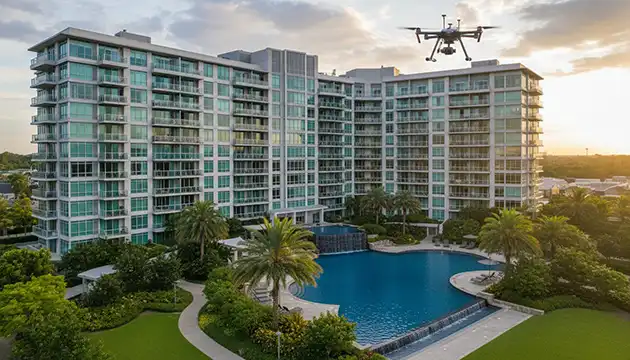
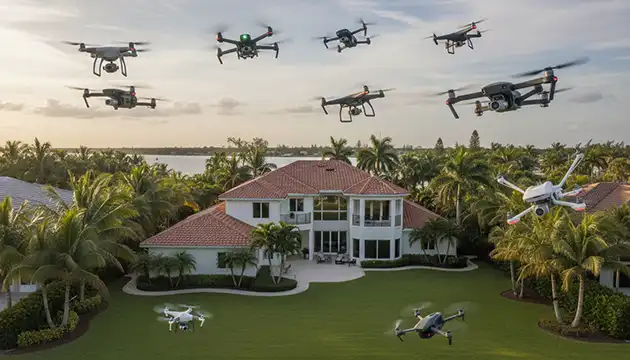
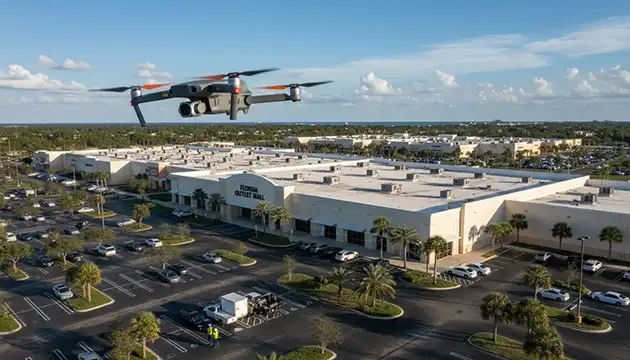
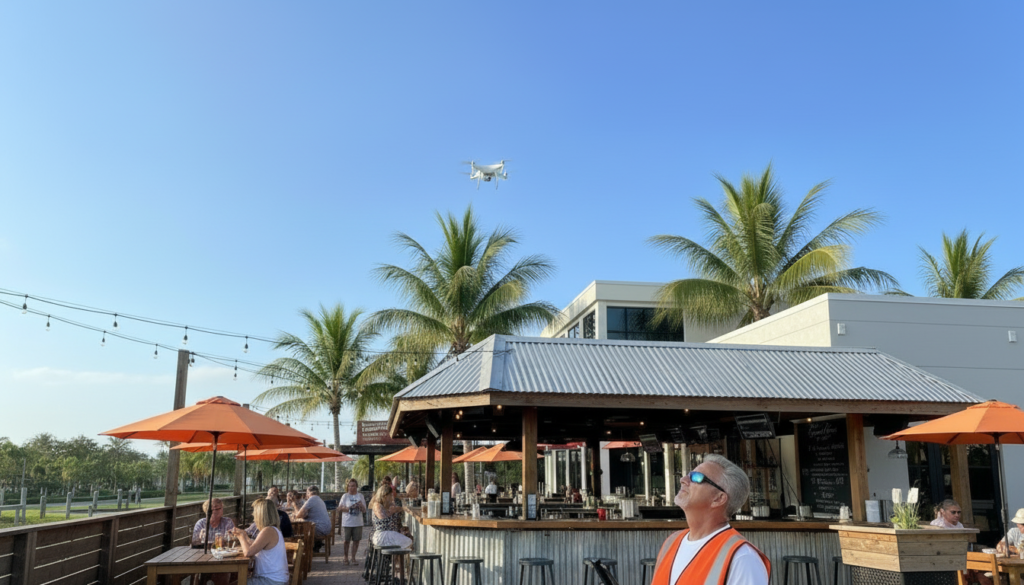
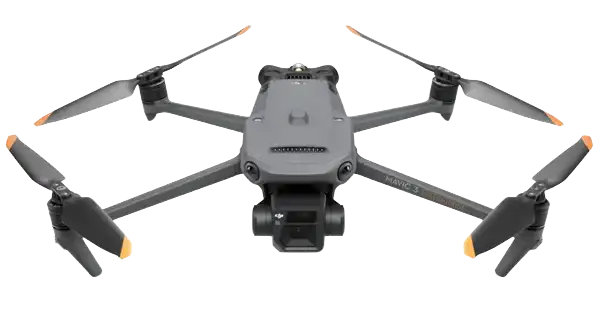
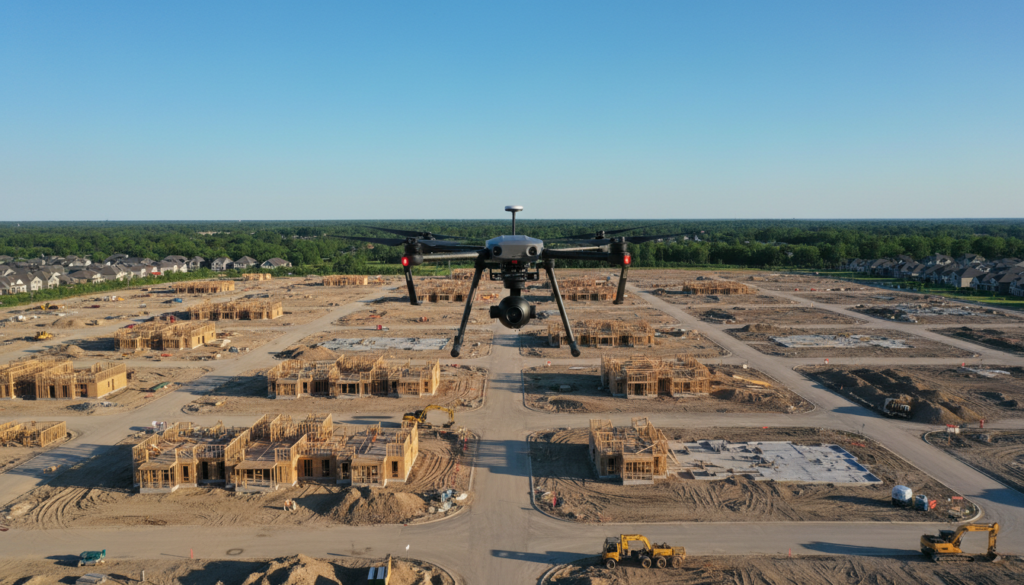
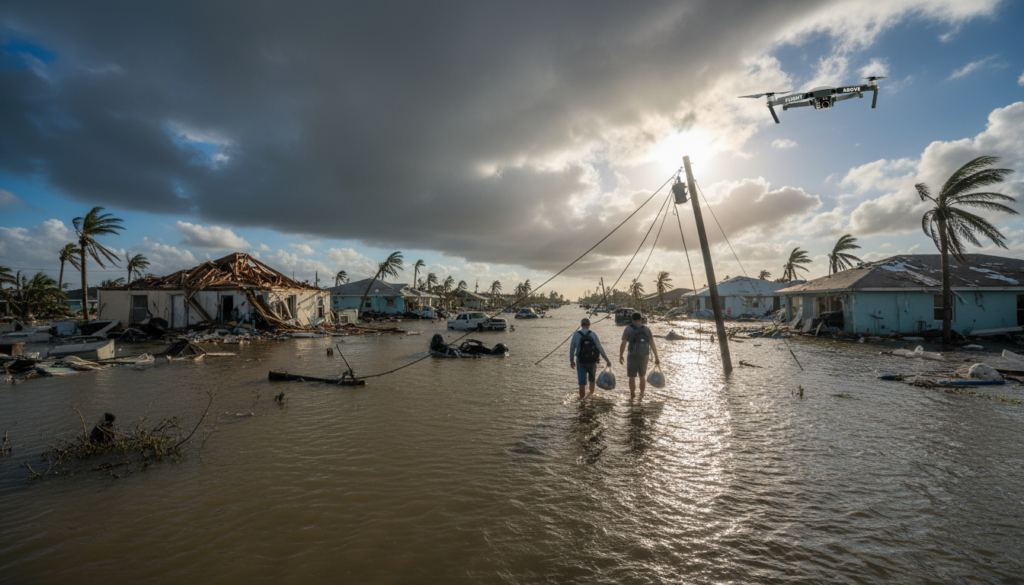
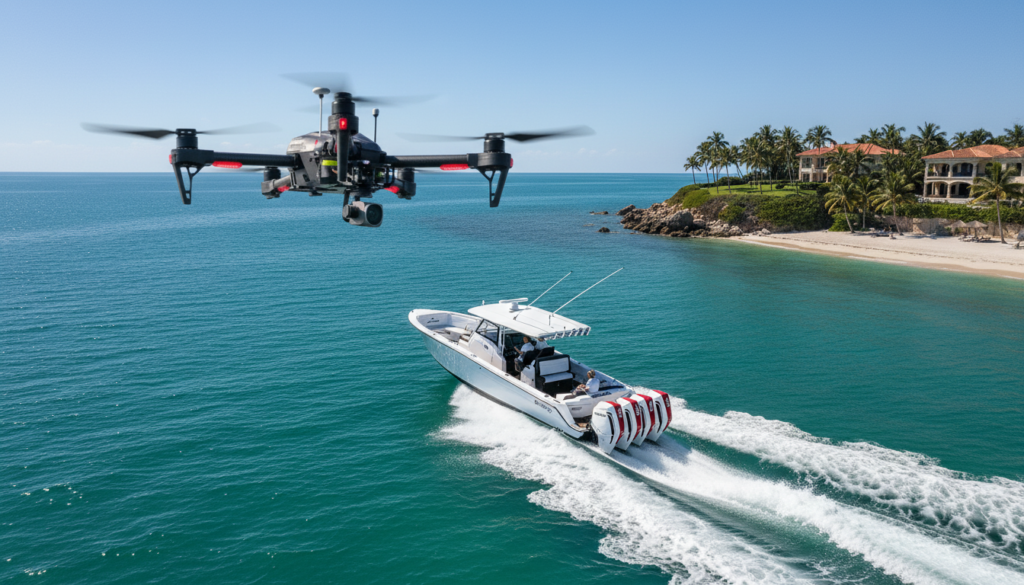
When someone lands on your website, you have just a few seconds to show who you are and why they should stay. Well‑placed aerial clips do that instantly for Southwest Florida businesses by showing location, scale, and professionalism in a way ground photos can’t.
Aerial Footage as the Website “First Impression.”
Your home page is often the first and only page visitors see. A short aerial clip can immediately show:
Where you are: near the beach, on a canal, off a main road, inside a golf community, or in a suburban plaza.
What your property looks like from above: parking layout, entrances, outdoor seating, docks, pool areas, or shopfronts.
Many local businesses use:
A looping header video (muted) is behind the main text on the home page.
A short aerial montage instead of a single static hero image.
For example, a waterfront restaurant might use a 10‑second flyover that starts over the water, passes over the outdoor deck, and settles on the building and docked boats. A boutique real estate office near the Gulf might open with a quick coastal skyline shot, then dip down to show the office nestled between neighborhoods it serves. In both cases, visitors know “where” and “what” within seconds.
Property and Project Showcases for Service Businesses
Service businesses in SWFL—roofers, landscapers, pool builders, solar installers, contractors—often win or lose work based on how convincingly they can show past projects.
On “Our Work” or “Project Gallery” pages, and on individual case‑study pages, drone clips can:
Show before‑and‑after views of roofs, landscape installs, or full exterior remodels.
Highlight scope and quality with short flyovers of completed jobs: a full re‑roof on several HOA buildings, a complete backyard transformation, or a solar array on a multi‑unit complex.
From a visitor’s perspective, this makes it much easier to:
Quickly see the scale of projects you handle (single homes vs. whole communities).
Visualize the end result far beyond what a close‑up photo of a patio or shingles can convey.
Instead of saying “we handle large projects,” you show an entire row of finished roofs or a full property makeover in one smooth pass.
Location, Directions, and “Know Before You Go” Content
In busy or tourist‑heavy parts of SWFL—downtowns, beach corridors, and highway plazas—just finding the right driveway can be a challenge. Aerials can remove that friction.
Businesses use overhead visuals to:
Show the parking layout and which lots or garages are available.
Clarify which unit or building is theirs in a strip center or multi‑building plaza.
Highlight nearby landmarks like beach access points, main intersections, hotels, or marinas.
A short aerial clip or annotated screenshot works well on:
“Contact” or “Visit Us” pages.
FAQ sections about parking and access (“Where do I park?” “Which entrance do I use?”).
This helps first‑time visitors, tourists, and delivery drivers alike. A quick overhead view can prevent missed turns, last‑minute texts, and late arrivals, which reduces frustration before people even walk through your door.
Community and Lifestyle Sections for Realtors and Hospitality
Real estate teams, small resorts, vacation rentals, and planned communities sell more than just a structure—they sell a lifestyle. Drone footage is perfect for that.
On “Neighborhood,” “Lifestyle,” or “Area Guide” pages, aerial clips can:
Showcase amenities: pools, clubhouses, tennis courts, marinas, dog parks, and golf courses.
Highlight proximity to beaches, parks, and main shopping/dining areas.
Tie together several key spots in a short “this is what it’s like here” video.
Typical styles that work:
A smooth flyover down a golf fairway, then a gentle pan to the clubhouse, pool, and surrounding homes.
A coastal shot starting over a canal and docks, then gliding toward the beach access, showing how walkable or boat‑friendly the area is.
This type of content keeps visitors on your site longer and helps out‑of‑area buyers or guests quickly understand what staying or living in your part of SWFL actually feels like.
Trust‑Building: About, Careers, and “Why Choose Us” Pages
Some of the best places to use drone footage are pages most owners overlook: About, Careers, and Why Choose Us.
Used here, aerial clips can:
On “About Us,” show your office, yard, or shop from above to give a sense of scale and legitimacy.
On “Careers”: Highlight real job sites or service areas to attract recruits who want to see the type of work and environments they’ll be in.
On “Why Choose Us”: Provide visual proof of safety and professionalism—organized job sites, clean trucks, proper equipment, and tidy staging.
Businesses often:
Embed short background clips next to text about experience, service area, or safety culture.
Use muted B‑roll of job sites behind testimonials or key selling points (“We’re organized,” “We respect your property”).
This turns generic promises into visible evidence. Instead of just claiming “we’re professional and careful,” your site quietly shows it.
Implementation Tips for Non‑Technical Owners
You don’t need to overhaul your entire site to benefit from drone content. A few targeted moves go a long way.
Clip length and formats:
Use 10–20 second loops for headers and background sections so pages load quickly and don’t feel overwhelming.
Use 30–90-second highlight videos on project, gallery, or “About” pages when users are willing to watch a bit longer.
Simple next steps:
Identify 2–3 key spots on your site where people decide to call, book, or request a quote (home page, service page, contact page). Consider placing aerial footage there first.
Ask your web person or platform support, “How can we add a video header here?” or “How do we embed a short clip from our video host?” Most modern website builders support this without major redesigns.
Make it easy to understand and load:
Add captions or short text overlays, such as “Waterfront dining,” “Full HOA re‑roof,” or “5 minutes to beach access,” so viewers immediately know what they’re seeing.
Keep file sizes reasonable and use web‑optimized formats so pages still load quickly on mobile, where most people browse.
You don’t need a huge budget, a complex website, or long videos to see a difference. A few well‑placed, purposeful aerial clips can dramatically upgrade how your Southwest Florida business looks and feels online—and, more importantly, help turn casual visitors into actual calls, bookings, and quote requests.
Most Florida property owners don’t want to become drone experts—they just want to know what’s okay, what’s not, and what to ask when a drone shows up. This guide walks through the key FAA rules that touch Florida neighborhoods, HOAs, and events, in plain language.
Who Makes the Rules: FAA vs. Property Owners
In the United States, the FAA controls the airspace—including the airspace above your house, HOA, or event venue. You own your land and buildings; the federal government regulates how aircraft (including drones) move in the sky.
As a property owner or HOA, you can control:
Whether someone may take off or land a drone from your property or common areas
Community rules about when and where drones may operate on HOA‑controlled land
Contract terms when you hire a drone operator
You cannot override federal flight rules. Even if an HOA says “no drones,” that doesn’t give it authority to rewrite FAA safety rules or ban all legal flights passing over the community at a safe altitude.
Simple takeaway: you can set rules about taking off and landing on your property or common areas, but you can’t rewrite FAA safety rules or “ban” legal flights in the sky above.
Recreational vs. Commercial Flying (And Why It Matters to You)
Drones operate under two broad categories:
Recreational flying – for fun only.
Example: a teenager practicing in the cul‑de‑sac, a hobbyist filming beach sunsets for personal use.
Commercial / Part 107 flying – any business purpose.
Examples:
Real estate listing photos or videos
Roof inspections for an HOA
Wedding or event coverage
Marketing videos for a resort or landscaping company
If money, advertising, or business promotion is involved, it’s almost always commercial, and the pilot should be operating under the FAA’s Part 107 rules (licensed remote pilot).
For Florida property owners, that means:
Most drones hired for real estate, HOA, or events are commercial and should be flown by a licensed pilot.
You’re within reason to ask basic questions before allowing or hiring one.
Questions to ask:
“Are you flying under Part 107?”
“Do you have your remote pilot certificate and insurance?”
If the operator dodges those questions, that’s a red flag.
Basic FAA Rules That Apply in Neighborhoods and HOAs
Some core FAA rules apply almost everywhere, including residential areas:
Visual line of sight – the pilot (or a trained visual observer) must be able to see the drone with their own eyes during flight.
Altitude – standard maximum is 400 feet above ground level, with some limited exceptions.
No careless or reckless flying – drones must be flown in a way that doesn’t endanger people or property and must stay well clear of other aircraft.
In Florida, many neighborhoods and HOAs are close to:
Airports and heliports
Hospitals with helipads
Coast Guard or law‑enforcement aviation activity
That often means the airspace above is controlled. A drone filming homes near a busy airport might require FAA airspace authorization, even if every homeowner and the HOA said “we’re fine with it.”
As an owner/manager, you don’t need to know the details—but you can ask:
“Have you checked the airspace for this location?”
“Do you have the necessary authorization, if required?”
Flying Over People: What’s Allowed and What Isn’t
The FAA is especially concerned about drones falling onto people or flying too close to crowds.
In simple terms:
Many commonly used drones cannot legally be flown directly over people who are not involved in the operation—especially in dense or moving crowds.
Some lighter or specially approved drones offer greater flexibility, but the pilot must still follow specific FAA regulations.
How this plays out in real life:
HOA block party on a cul‑de‑sac: A responsible pilot may fly off to the side, keep altitude and distance, and avoid hovering directly above dancing kids or food lines.
Neighborhood 5K or charity walk: Good practice is to fly beside or ahead of or behind the route at safe distances, not directly over the moving pack of runners or walkers.
Wedding or festival in a park or at the beach: The drone should avoid dense groups, stage areas with overhead structures, and crowded dance floors, focusing on wider establishing shots.
Practical guidance:
Ask the pilot: “How will you avoid flying directly over people who aren’t part of your crew?”
Expect to see some stand‑off distance and angles that keep the drone away from the center of the crowd.
Night Flying and Special Waivers
Rules for night flying have changed over the last few years, which is why older online advice can be confusing.
Under current FAA rules, a licensed Part 107 pilot can fly at night if:
The drone has proper anti‑collision lights that are visible from a long distance.
The pilot has completed the FAA’s required night operations training as part of their certification or recurrent training.
In the past, special waivers were needed just to fly at night, so you may still see outdated guidance.
Common Florida scenarios where night flying comes up:
Twilight or nighttime real estate shoots to capture pool and landscape lighting
HOA holiday events, outdoor concerts, or fireworks
Evening weddings and beach receptions
As an owner or planner, you can confidently ask:
“Do you have the proper lighting on your drone for night operations?”
“Are you current on the FAA’s night flying training?”
If the answer is vague or defensive, that’s cause to slow down and get clarity.
Events on Private Property: What Owners and Planners Should Check
Even when an event is on private property—a backyard, beach house, clubhouse, resort, or golf course—commercial drone operators must still follow FAA rules.
Common scenarios:
A couple hires a drone for a backyard or beach wedding.
An HOA brings in a drone to film a community event, like a fall festival or pool party.
A corporate planner uses a drone at a resort or golf course event.
Minimum checklist for owners and planners:
Confirm Part 107 certification
“Can you send a copy or show your remote pilot certificate?”
Ask about airspace/authorizations
“Have you checked what airspace we’re in and whether any authorization is needed?”
Discuss safety near people and structures
“What’s your plan for staying clear of guests, tents, cabanas, and parked cars?”
Confirm insurance
“Do you carry liability insurance for your drone operations?”
You’re not being difficult you’re protecting your guests, your property, and your own liability.
HOAs and Community Rules: What’s Reasonable HOAs have to balance safety, privacy, and federal rules.
In general, HOAs can:
Set policies for launching and landing drones on common property (parks, pools, clubhouse areas).
Establish reasonable “time, place, and manner” rules to reduce nuisance (for example, no drone takeoffs from the pool deck during posted quiet hours).
HOAs cannot:
Create rules that conflict with federal safety regulations.
Promise residents that “no one will ever fly over our community,” since legal transit flights can still occur in the sky above.
Best practices for HOAs include:
Draft a simple, written drone policy covering noise, privacy, and safety expectations.
Encourage residents and vendors to use licensed pilots for any commercial work.
Clarify who to contact with concerns—management, the board, or local law enforcement if behavior appears reckless or harassing.
A clear policy helps prevent ad‑hoc arguments at the pool fence every time a drone is seen.
Privacy, Noise, and “What If I Don’t Want a Drone Here?”
FAA rules focus on safety, not privacy but property owners understandably care about both.
If you’re uncomfortable with a drone:
Talk to the pilot or client first, if you know who they are.
Calm, direct questions often solve the issue quickly.
In communities, work through the HOA or management if the issue keeps coming up.
If the flying is clearly reckless or harassing (very low over people, near windows, or repeatedly buzzing property), contact local law enforcement and describe the behavior.
What not to do: yelling, throwing objects, or trying to knock down a drone. That can be dangerous and may itself be illegal.
Simple, respectful scripts you can use:
“Can you tell me who hired you and what you’re filming?”
“Would you mind adjusting your shots so you’re not hovering so close to our windows/pool area?”
Most professional operators will work with you to adjust angles and distances.
Red Flags: When a Drone Operation Should Concern You
Certain behaviors should make any Florida property owner, HOA, or planner pause.
Red flags:
The pilot refuses to answer basic questions about licensing or insurance.
The drone repeatedly flies at eye level near people, vehicles, or windows when it doesn’t need to.
The operator seems unaware of nearby airports, heliports, or hospitals.
The drone is flown at night with no visible lights.
If you see this:
Document time, place, and what you observed (photos or short clips can help).
Reach out to the event organizer, homeowner, or property manager first if it’s tied to a specific event.
If there’s an obvious safety risk, contact local authorities and focus on the behavior:
“A drone is flying very low over people and traffic,” not just “there’s a drone.”
Simple Questions Florida Property Owners Should Always Ask
Whenever you hire or host a drone—whether for a listing, an HOA project, or an event—keep this checklist handy:
Are you a licensed remote pilot under Part 107?
Do you have insurance for your drone operations?
Have you checked the airspace and any local restrictions for this location?
How will you avoid flying directly over people who aren’t part of the shoot or event?
If we’re flying near sunrise, sunset, or at night, are your lighting and training up to FAA standards?
You don’t need to memorize the entire FAA rulebook. If you understand these core ideas and ask these few questions, you’ll be in a strong position to host drone operations that are safe, legal, and genuinely beneficial for your neighborhood, community, or event.
Coastal homes in Southwest Florida live in a harsher environment than most people realize, and the damage starts earlier and more subtly than you can see from the driveway. Drone inspections give you a safe, detailed way to monitor hidden wear before it leads to leaks, major repairs, or insurance surprises.
Coastal Reality in SWFL
Along the SWFL coast from Naples north, homes sit in a constant mix of salt‑laden air, strong sea breezes, summer thunderstorms, and repeated tropical systems. Roofs and exteriors also take year‑round, nearly vertical sun and intense UV. Compared to inland properties, this combination accelerates wear on shingles, tiles, metal roofs, fasteners, sealants, stucco, and paint.
What makes coastal degradation tricky is that it is initially faster and more subtle. A roof can look “fine” from the street while fasteners rust, coatings chalk, and tiles start to crack up high near ridges and edges. Aerial inspections are uniquely valuable here because they let you routinely see the areas that age first, in enough detail to catch problems early. Salt Air: Corrosion and Hidden Damage
Salt air and salt spray are relentless around the coast. Fine salt particles land on:
Metal roofs and trim
Fasteners and flashing
Drip edges, gutters, and railings
Rooftop HVAC units, vents, and solar mounts
Over time, that salt attracts moisture and accelerates corrosion. Rust often starts in tucked‑away spots: behind parapets, under overhanging tiles, along eaves, in roof‑to‑wall transitions, or on the backside of metal edges—places you can’t see well from the ground or even from a single ladder position.
A drone can hover right where the damage starts. High‑resolution, close‑up images reveal:
Early rust blooms on fasteners and flashing
Oxidation and bare spots where metal coatings are failing
Rust trails running down from compromised screws or brackets
For HOAs and property managers, consistent drone flights across multiple buildings make it easy to spot patterns, such as one elevation receiving more salt spray due to prevailing winds, and to plan targeted maintenance rather than waiting for leaks.
Wind Exposure: Uplift, Loose Components, and Storm Readiness
On the SWFL coast, steady sea breezes are just the baseline. Add in daily summer thunderstorms, occasional strong cold fronts, and the real risk of tropical storms and hurricanes, and your roof sees repeated wind loading year after year.
That repeated loading gradually:
Loosens shingles or tiles
Lifts edges and flashing
Displaces ridge caps, soffits, and fascia components
From the street, the home may look perfectly normal. From above, you can see shingle tabs not lying flat, tiles slightly out of alignment, or flashing that has just started to lift.
Drones are ideal because they:
Detect subtle uplift or displacement you’d never notice from ground level
Scan entire roof fields quickly after a wind event to find new issues before the next storm
Document pre‑storm conditions so you have clear “before” evidence if you ever need to file a claim
For example, after a strong wind event in a coastal community, a drone survey of several streets showed lifted shingle leading edges on multiple roofs that appeared fine from the driveway. Those owners could re‑secure or repair before the next storm turned “minor uplift” into missing shingles and water intrusion.
Roof Materials in Coastal SWFL: Why Aerial Detail Matters
Coastal SWFL uses a mix of roof types, and each reacts differently to salt, wind, and sun.
Concrete/clay tile Tiles can develop cracked corners, slipped pieces, and broken ridge caps. Strong winds and foot traffic can expose the underlayment, especially near ridges and hips. From above, a drone clearly shows patterns of broken tiles and any areas where underlayment is visible.
Metal standing seam or 5V These roofs resist wind very well but are vulnerable to coating failure and fastener corrosion in salt air. Fasteners can rust, seams can open, and panels can loosen over time. Aerial oblique views reveal rust streaks, loose screws, lifted seams, and failing sealant along ridges and edges.
Architectural shingles Shingles suffer from granule loss due to UV and wind, lifted tabs, and nail pops. Early granule loss can be seen as lighter, smoother patches from above, long before you’d notice it looking up from the yard. Drones capture the overall pattern so you can distinguish normal aging from unusually fast wear in specific zones.
Flat roofs (TPO, modified bitumen, etc.) Common on condos and commercial buildings, these roofs can develop ponding water, seam failure, and blistering. From above, drones easily capture ponding patterns, wrinkled seams, and soft, blistered areas that are nearly impossible to see from the ground.
Top‑down and angled drone views reveal not just isolated defects, but patterns: repeated broken tiles near ridges facing the gulf, rust trails in one corner, or consistent ponding near certain drains. That makes it easier to distinguish normal aging from early failure that needs attention now.
Intense Sun and UV: Accelerated Aging from Above
SWFL’s sun is brutal on building materials. Intense UV exposure:
Breaks down shingles, sealants, and coatings faster than in cooler, cloudier regions
Causes chalking and fading on metal and flat roof membranes
Makes plastics and sealants brittle and more prone to cracking
Drone inspections shine here because you can fly the same property on a consistent path year after year. When you compare images over time, you can actually see:
Shingles losing granules and darkening or lightening in specific areas
Metal roof coatings are shifting from glossy to chalky, with bare spots starting to appear
Flat roof membranes going from smooth to crazed, blistered, or discolored
By spotting these changes early, owners can re‑coat, seal, or repair before UV damage turns into leaks. Periodic aerial “health checks” are a practical way to stay ahead of Florida’s accelerated aging curve.
Safety and Access on Coastal Properties
Many coastal roofs are simply not convenient—or safe—for frequent ladder inspections:
Steep pitches and complex designs
Multi‑story homes perched near seawalls or canals
Tight side yards, dense landscaping, and pool cages blocking ladder placement
For older residents, property managers, and out‑of‑area owners, the last thing you want is multiple trades climbing all over a fragile tile or metal roof just to “take a look.”
Drones reduce that risk dramatically. A single flight can:
Cover all roof slopes, ridges, valleys, and gutters without anyone leaving the ground
Inspect upper elevations, chimney areas, stucco cracks, and soffit conditions without dragging a ladder through landscaping
Provide clear visuals for contractors so they only climb when there is a specific, necessary task
You get better information with less wear and tear on the structure and far less liability.
Documentation for Insurance, HOA, and Resale
Coastal properties often have higher premiums and stricter underwriting because insurers know the risks. Clear, dated imagery from above is a powerful tool for:
Insurance
Providing baseline documentation for applications and renewals
Showing “before” and “after” conditions around storms, making claims smoother and more credible
HOAs and condo boards
Planning reserves and maintenance by seeing which buildings or elevations are aging fastest
Scheduling proactive roof work instead of reacting to emergency leaks
Resale
Sellers can demonstrate that roofs and exteriors have been monitored and maintained, with reports to show it
Buyers can spot potential issues—cracked tiles, corrosion, ponding, or patched areas—before making decisions
This kind of documentation makes coastal ownership more predictable and less stressful.
How Often Should Coastal Properties Be Inspected by Drone
A practical schedule for SWFL coastal properties looks like this:
Annually, for general conditions, even in “quiet” weather years
After significant wind or hail events, especially if nearby homes show visible damage
Before and after major hurricane seasons, for high‑value or heavily exposed properties
Before and after major projects, like solar installations or re‑roofing, to verify conditions and workmanship
A regular drone inspection routine:
Catches issues when they are small and inexpensive
Extends roof life by guiding timely maintenance and coatings
Reduces surprise repair bills that are common in harsh coastal environments
You’re effectively creating a visual maintenance log for the roof’s lifetime.
What Makes a Coastal Drone Inspection “Professional”
Not all drone flights are equal. For SWFL coastal properties, a professional inspection should include:
A Part 107 licensed pilot with specific coastal and roofing experience
Complete coverage of all slopes, ridges, hips, valleys, and transitions
Close‑ups of corrosion‑prone areas: metal edges, fasteners, flashing, rooftop equipment, solar mounts, and railings
Clear image labeling: front/rear/left/right elevations, or compass directions, so anyone can orient quickly
A short, plain‑language summary that highlights findings specifically related to:
The goal is not just pretty aerial photos. It’s actionable information that owners, managers, and contractors can use to prioritize maintenance and protect the property.
Conclusion: Why Coastal SWFL Is the “Sweet Spot” for Drone Inspections
Coastal Southwest Florida combines salt air, frequent wind, specialized roof materials, and intense sun in a way that makes roofs and exteriors age faster—and more subtly—than most people expect. The earliest damage occurs where you can’t easily or safely see it, but a drone can.
Drone inspections provide safer, faster, and more detailed insight into how those forces affect your home or portfolio. For coastal property owners, building drone inspections into your routine is a smart way to protect a high‑value asset and avoid nasty surprises.
Southwest Florida roofs take a beating every storm season, and most of the serious damage starts small and out of sight. Understanding what actually happens on your roof and acting quickly when you see it are among the best ways to protect both your property and your peace of mind.
Why SWFL Roofs Are So Vulnerable in Storm Season
Along the SWFL coast, roofs live in a mix of salt‑laden air, regular thunderstorms, strong sea breezes, and the very real threat of tropical storms and hurricanes. On top of that, intense sun and UV bake shingles, tiles, sealants, and coatings almost every day of the year. By the time a named storm appears on the radar, many roofs already have metal and fasteners beginning to corrode, shingles and sealants turned brittle by UV exposure, and tile systems stressed by years of heat and prior wind events.
Storm damage often builds on those existing weaknesses. A fastener that was “just a little rusty” or a shingle seal strip that was “mostly holding” can fail in one bad night of wind and rain. That’s why catching issues early—before storm season or right after a smaller event—is critical if you want to avoid costly surprises.
How Salt Air Sets the Stage for Storm Damage
Salt air and salt spray are constant players near the Gulf. Fine salt particles settle on your roof and slowly:
Corrode fasteners, flashing, drip edges, and metal valleys
Break down protective coatings on metal roofs and trim
Create rust streaks and silently weaken attachment points
After a strong storm, that groundwork shows up as:
Rusted fasteners that actually pull out under wind uplift
Loose or rattling metal panels or edge trim
Flashing that lifts, buckles, or tears because the metal was already thin and compromised
From the driveway, the roof might look fine. From above, you often see rusted screws backing out of metal, edges starting to curl or gap, and thin, chalky coatings that no longer protect the metal underneath. The urgency here is simple: salt‑weakened components can go from “cosmetic” to “leaking into your attic” in a single storm.
Wind Exposure: The “Invisible” Damage We See From Above
Every storm season brings wind‑related damage patterns that are easy to miss from the ground.
For shingle roofs, we commonly see:
Lifted or creased tabs where the shingle has bent but not blown off
Missing shingles along edges, ridges, and around roof‑to‑wall transitions
Nail pops and disturbed seal strips mean the shingle is no longer properly bonded
For tile roofs, typical issues are:
Cracked or displaced tiles, especially along ridges and eaves
Broken ridge caps where wind and debris hit hardest
Exposed underlayment in areas where tiles have shifted or fractured
For metal roofs, we often find:
Lifted seams or edges at eaves and ridgelines
Loose ridge caps and trim pieces that have started to move
Small gaps at overlaps and penetrations where the sealant has let go
A lot of this damage is subtle. Tabs can be unsealed but still lie roughly flat; tiles can appear aligned from the yard but be cracked or shifted just enough to expose the underlayment. After one strong tropical system, for example, a drone sweep over a coastal block revealed widespread cracked shingles and multiple displaced tiles that would not be noticed from street level. The owners who jumped on those issues avoided much larger leaks in the next round of storms.
Roof Materials: How Each Type Typically Fails After Storms
Different roof types fail in different ways, and knowing what’s typical helps you decide what to check first.
Concrete/clay tile roofs
Common post‑storm issues:
Cracked corners and fractured tiles from wind‑driven debris
Slipped tiles that expose the underlayment in small patches
Broken or missing ridge and hip tiles at the highest, most exposed points
Delaying repairs is risky. Once the underlayment is exposed, UV and wind quickly degrade it, and water can find pathways beneath the tile system long before any stain appears inside the home.
Metal roofs (standing seam, 5V, etc.)
Common post‑storm issues:
Lifted or slightly deformed panels at eaves, ridges, and along edges
Fasteners backing out in older exposed‑fastener systems
Compromised sealant at seams, end laps, and penetrations
Storms plus salt air make a bad combination. Even small panel movement can open up rusty fastener holes and seam gaps, allowing water in and accelerating corrosion around those points.
Architectural shingle roofs
Common post‑storm issues:
Creased or lifted shingles that have effectively “failed,” even if they haven’t blown off yet
Granule loss from intense wind and rain, especially in certain slopes or zones
Shingles pulled at corners and edges, particularly near ridges and eaves
These issues are hard to see from the ground because the roof still appears mostly covered. Insurers often treat significant creasing and broken seal strips as serious damage, because those shingles are no longer doing their job in future storms.
Flat roofs (TPO, modified bitumen, etc.)
Common post‑storm issues:
New ponding areas from slight deck or insulation movement
Open seams or lifted edges where wind has caught the membrane
Blisters or wrinkles caused by trapped moisture under the surface
Even small seam openings can allow water into multi‑unit buildings and common areas, causing widespread interior damage. That’s why flat roofs deserve special attention after any big wind or rain event.
Urgency and Trust: Why Timing Matters Right After a Storm
Acting quickly after storms isn’t just about the roof—it’s about everything under it and everyone depending on you.
Timely inspections help:
Protect interiors and common areas before the next rain pushes water farther in
Preserve relationships with residents and tenants who expect a proactive response
Maintain credibility with insurers by documenting damage promptly and accurately
When inspections are delayed, small openings often become major leaks within a few weeks of daily storms. That’s when you start dealing with soaked insulation, damaged drywall, and mold problems that drive repair costs through the roof. Insurers may also question late‑reported damage, especially if it appears something could have been minimized with quicker action.
A fast, structured inspection, especially with good aerial coverage, helps separate true storm damage from old issues and tells you which roofs and buildings need immediate attention versus those that can be monitored over time.
Why Drone Inspections Are So Effective After SWFL Storms
From a homeowner or manager’s perspective, drones solve three big problems at once.
Safety: They inspect steep, wet, or damaged roofs without sending workers up ladders on unstable surfaces.
Coverage: They can quickly scan an entire neighborhood, HOA, or condo campus, rather than climbing one roof at a time.
Clarity: They provide clear, zoomable images of:
Creased and lifted shingles
Cracked or displaced tiles
Lifted metal edges and trim
Ponding and seam issues on flat roofs
During busy storm seasons, contractors are stretched thin. When you bring them detailed drone images and a prioritized list of issues, you:
Get triage done faster
Help roofers and adjusters focus on the worst damage first
Build trust with residents by showing that assessments are being handled systematically, not randomly
That combination of safety, speed, and documentation is exactly what storm season demands.
What a Good Post‑Storm Roof Check Should Include
Whether you hire a drone pilot, a roofer, or both, a professional post‑storm roof check should give you more than “looks okay” or “needs work.” You should expect:
Clear, dated photos of all slopes, ridges, and roof edges
Close‑ups of any suspected wind, debris, or impact damage
Notes tied to specific locations, such as:
“Lifted shingles along rear eave”
“Cracked tile at front right hip”
“New ponding area near rooftop unit on Building B”
And you should receive a simple, prioritized summary, using language like:
“Monitor” (watch over time)
“Repair soon.”
“Urgent before next storm.”
This level of detail makes it much easier to:
Talk with roofers and adjusters about scope and pricing
Decide where to spend money first when budgets are tight
Build a record you can refer back to for future storms and insurance renewals
Preparing for the Next Storm: Preventive Steps Between Events
Between major storms, a few targeted steps go a long way:
Address known lifted shingles, cracked tiles, loose metal edges, and open seams before peak season hits.
Keep an eye on known weak areas, like near ridges, around rooftop units, and along older roof transitions.
On coastal properties, pay special attention to:
Metal edges and fasteners showing rust or staining
Older shingle roofs with obvious granule loss or patchy color
A simple, effective rhythm looks like this:
Baseline inspection before storm season
Focused post‑storm inspections after significant events
Follow‑up checks on roofs with marginal or repaired damage to make sure fixes hold
That rhythm helps you stay ahead of problems instead of always playing catch‑up.
Closing: Reassurance and Call to Smart Action
In Southwest Florida, storms, salt air, and UV make roof damage common—but often hidden in the early stages. When you know how each roof type tends to fail and where to look after a storm, you’re far less likely to be blindsided by the next round of weather.
You don’t need to become a roofing expert to stay protected. What you do need is a habit of quick, well‑documented inspections, especially from above whenever storms roll through. That one habit protects the building, the budget, and the trust your residents or tenants place in you throughout storm season.
Southwest Florida HOAs oversee millions of dollars’ worth of roofs and buildings in one of the toughest climates in the country. Drone inspections give boards and managers a safer, faster way to actually see what they’re responsible for, so they can manage risk, reserves, and vendors with their eyes open.
Why Drone Inspections Matter for SWFL HOAs
Coastal and near‑coastal SWFL communities live with salt air, intense sun, frequent thunderstorms, and recurring tropical systems. That combination accelerates wear on tile, metal, shingles, flat membranes, sealants, stucco, and paint compared to similar properties farther inland. For HOAs, the impact is multiplied: you’re responsible for many buildings, multiple roof types, and extensive shared infrastructure, all under one budget and insurance program.
Unlike a single‑family owner, a board has shared liability, reserve requirements, and constant pressure from rising premiums and stricter underwriting. Drone inspections give boards and managers better information—faster and without sending people onto every roof—so you can make smarter decisions about reserves, repair timing, project scope, and risk.
Key Benefits for HOAs and Property Managers
Safety and liability reduction
Every time a person goes on a roof, your community takes on risk. Steep-sloped tile roofs, multi‑story buildings, and aging structures increase the risk of falls and damage. Drone inspections reduce the number of ladder trips and roof‑walks by capturing detailed visuals from the air. That also reduces the parade of contractors “just taking a look,” which is especially important on fragile tile and metal roofs, where foot traffic can cause damage and lead to disputes.
Cost control and planning
Catching issues early is where drones pay for themselves. Aerial inspections can reveal cracked or slipped tiles, corrosion on metal edges and fasteners, ponding water on flat roofs, and failing sealants, long before they lead to interior leaks and emergency calls. With community‑wide imagery, boards and managers can identify which buildings are aging fastest and develop realistic reserve studies and roof-replacement timelines, rather than relying on guesswork.
Stronger documentation
Drone flights create community‑wide, date‑stamped imagery of roofs and exteriors. That gives you:
Visual proof for insurers and lenders that you’re actively monitoring and maintaining common elements.
A shared factual reference for boards, managers, and vendors when discussing scope and pricing.
A historical record you can revisit when questions come up years later.
For example, one coastal community that implemented annual drone inspections discovered that only certain buildings and elevations had significant tile damage and corrosion. With that evidence, the board was able to justify targeted repairs and phased replacements rather than an expensive, community‑wide re‑roof, thereby preserving reserves and avoiding a large special assessment.
What Drones Can (and Can’t) Inspect in an HOA Community
Where drones excel
For HOAs and multifamily properties, drones are particularly effective for:
Roofs on multifamily buildings, clubhouses, fitness centers, and other common‑area structures
Gutters, fascia, soffits, and stucco cracks on upper stories that are hard to reach safely
Flat roofs on mid‑rise buildings, where ponding, seams, rooftop equipment, and railings need regular review
Pool houses, garages, pergolas, monument signs, solar arrays, and other elevated assets
They provide a consistent, top‑down, and angled view that you simply can’t get from the ground.
Clear limitations
Drones provide visual data only. They do not replace:
Engineering evaluations
Core cuts on flat roofs
Interior leak tracing or moisture mapping
Some issues will still require on‑roof confirmation or invasive testing, especially for warranty claims, structural questions, or complex water-intrusion cases. Boards should treat drones as an enhanced eyes‑on tool that improves what your roofers, engineers, and reserve specialists can do—not as a magic, one‑stop solution.
Risk Management, Insurance, and Claims Support
High‑quality drone imagery is powerful in three risk areas: underwriting, claims, and disputes.
Insurance renewals and underwriting Clear, recent imagery of all roofs and exteriors shows underwriters that the community’s major components are intact and monitored. That can support better terms and reduce unpleasant surprises during inspections.
Post‑storm claims If you have “before” imagery on file, a post‑storm drone flight can produce precise “after” visuals. That makes it far easier to demonstrate where damage is new versus pre‑existing and to prioritize which buildings need immediate tarping, repairs, or full replacement.
Dispute reduction When everyone—board, manager, contractor, and adjuster—is looking at the same clear, time‑stamped images, it’s harder for disagreements over condition or scope to spiral into conflict.
For storms specifically, drones enable rapid, community‑wide triage. Instead of sending people to each roof with ladders, a drone team can scan multiple buildings in a day, flag serious damage, and help you direct limited contractor resources where they’re needed most.
Data handling matters too. Boards should ask:
How and where images are stored
Who has access (board, manager, vendors, insurers)
How long data is retained and how it is organized for easy retrieval
Having an organized digital archive of inspections becomes a real asset when owners, buyers, or insurers start asking hard questions later.
Compliance and Privacy: What Boards Should Understand
Legal and operational compliance
In simple terms, any paid work requires:
A licensed remote pilot under FAA Part 107
Adherence to airspace rules, altitude limits, and visual line‑of‑sight requirements
Boards don’t need to be aviation experts, but you should at least confirm that your vendor is properly licensed, insured, and operating under written procedures.
Privacy expectations in communities
Residents often worry that drones are “spying.” A professional vendor will have clear policies and practices to avoid that:
Focusing capture on roofs and building exteriors, not inside windows, lanais, or courtyards
Flying predictable, efficient patterns rather than hovering over occupied areas
Responding promptly and professionally if a resident raises a concern
Best practice for HOAs is to:
Notify residents in advance via email, newsletters, and/or signage
Explain the purpose: maintenance, safety, and insurance documentation—not surveillance
Provide a point of contact for questions
Clear communication on the front end prevents most complaints on the back end.
How Often Should an HOA Use Drone Inspections?
For SWFL, a practical baseline looks like this:
Annually: Roof and exterior condition surveys for most communities, more often for older roofs or very exposed sites.
After major events: Wind, hail, or tropical storms that likely stressed roofs and exteriors.
Before and after large projects: Re‑roofing, solar installations, major HVAC or parapet work, to document pre‑project condition and post‑project workmanship.
Building drone inspections into your maintenance calendar:
Helps avoid surprises that lead to emergency assessments
Improves the accuracy of reserve schedules by tying numbers to actual, documented conditions
Demonstrates to owners and insurers that the board is proactive, not reactive
Think of it as adding a scheduled “checkup” for your community’s largest assets.
Choosing the Right Drone Vendor for Your HOA
Selecting the right partner is where boards can add significant value. Consider this checklist:
Credentials
Current Part 107 certification
Experience specifically with HOAs, condos, or multifamily communities
Proof of insurance:
General liability
Ideally, professional liability/errors & omissions
Experience and process
Familiarity with tile, metal, shingle, and flat roofs is common in SWFL
Written safety procedures and standard flight plans
Ability to scale:
Handling multiple buildings and multi‑day projects without disrupting residents
Ask how they handle no‑fly days (weather, airspace restrictions) and how they coordinate with your management team.
Structured folders that your management company can store on its own systems
Always request sample reports from other HOA or condo clients. You’re not buying “flight time”; you’re buying clarity and documentation your board can actually use.
How Drone Inspections Fit with Engineers, Roofers, and Reserve Studies
Drone inspections complement your existing professionals:
Roofers Get better visuals and measurements before they bid, which leads to more accurate proposals and fewer change orders. They can also focus in‑person inspections on areas already flagged as high‑risk, saving time.
Engineers Use the aerial overview to prioritize where to perform close, hands‑on evaluations. That reduces the amount of walking and exploratory work they have to do.
Reserve study specialists Benefit from up‑to‑date imagery of all roofs and exteriors, improving the accuracy of life‑cycle estimates without multiple site walks.
Used together, these tools and experts can reduce total professional fees and prevent “blind” recommendations made from limited ground views or outdated conditions.
Communicating Drone Programs to Owners and Residents
Successful programs stand on clear communication. Practical steps:
Explain the “why” at meetings and in newsletters:
Safety and liability reduction
Better cost control and reserve planning
Improved insurance readiness
Address privacy up front:
What will be photographed (roofs and exteriors only)
That imagery is for the association’s maintenance and insurance purposes
Provide a simple FAQ:
When flights will occur and approximately how long they’ll last
Whether drones will be flown over common areas only or also over individual buildings
Who can access the images (board, manager, select vendors), and how they’re stored
Transparent communication builds trust and reduces complaints or rumors.
Why Drone Inspections Are a Smart Strategy for SWFL HOAs
Southwest Florida HOAs manage high‑value, weather‑exposed assets under increasing pressure from storms, aging infrastructure, and a difficult insurance market. Drone inspections give boards and property managers a safer, more efficient way to see the true condition of their roofs and exteriors across the entire community.
When you select the right vendor and fold drone inspections into your regular planning, you:
Protect reserves by catching issues early and scoping projects correctly
Support better bids, repairs, and professional recommendations
Strengthen your position with insurers, lenders, and owners by showing you have hard data—not just opinions
HOAs that embrace professional drone inspections aren’t chasing a tech fad; they’re adopting a more defensible, business‑like way to manage a community’s most expensive assets in a demanding Southwest Florida environment.
If you stood in a park in 2013 and saw a white, plastic, four-armed toaster descending rapidly toward a duck pond, that was probably me.
Back then, being a “drone pilot” wasn’t a career path; it was a high-stakes hobby for people who enjoyed the feeling of burning money in mid-air. Fast forward to today, and I’m a Part 107 FAA-certified commercial pilot, navigating complex airspace and capturing cinematic data for industries I didn’t even know existed a decade ago.
It’s been a wild ride. Let’s spool up the motors and head back to the beginning.
The Phantom Menace (Circa 2013)
In 2013, DJI released the Phantom 1. It was the Volkswagen Beetle of the sky—clunky, iconic, and prone to spontaneous decisions.
There was no “Lightbridge” or “OcuSync.” There was no live video feed on your phone. To see what the drone saw, you had to bolt on a GoPro Hero 3 and hope for the best. If you wanted a “First Person View” (FPV), you had to solder a 5.8GHz video transmitter onto the internal motherboard, strap a mushroom antenna to the bottom, and wear a pair of bulky goggles that made you look like a low-budget cyborg.
The Experience: Flying the original Phantom was an exercise in pure anxiety. It didn’t have vision sensors or obstacle avoidance. If it drifted toward a tree, it was going to hit that tree.
The most terrifying feature? The Flyaway. Early GPS modules were… optimistic. Occasionally, the Phantom would decide its true home was in a different zip code and simply bolt for the horizon. You’d stand there, controller in hand, watching your $1,000… investment become a very expensive UFO.
Pro Tip from 2013: If the LED on the back started blinking yellow, you didn’t check the manual. You ran.
The Golden Age of “Wait, Is This Legal?”
As we moved into the Phantom 2 and 3 era, the technology improved. We used 3-axis gimbals, so the footage didn’t look like it was filmed during an earthquake. This was the “Wild West” phase.
I spent those years learning the hard way. I learned that seagulls are remarkably territorial. I learned that “Return to Home” is a suggestion, not a law of physics.
Most importantly, I learned the Zen of the Crash. If you fly enough, you will eventually turn your drone into confetti. The mark of a true pilot isn’t crashing; it’s knowing how to rebuild the shell with zip ties and sheer willpower.
I started getting a few requests. A friend wanted a shot of their roof. A local realtor wanted a “cool angle” of a backyard. There were no real rules yet, just a vague sense that the FAA was watching and that I should probably stay away from airports.
The Shift: Professionalism and the Part 107
Everything changed on August 29, 2016. That was the day the FAA implemented Part 107, the Small UAS Rule. Suddenly, “drone guy” became “Unmanned Aircraft Systems Pilot.”
So, I spent 11 years enjoying being the drone guy. Through different drones over the years, I learned to repair them as much as to fly them. I was the nerd who traveled with a drone and a video camera on vacations…
The transition from hobbyist to pro isn’t just about buying a more expensive drone. After 11 years of navigating the skies as a dedicated hobbyist, I decided it was time to turn my passion for flight into a career.
Moving beyond the casual weekend fly-ins, I retired my “amateur” status to master the technicalities and regulations required for formal certification.
Now, I’ve officially transitioned from a long-term drone enthusiast to a fully licensed pilot, ready to bring over a decade of aerial experience to the professional industry.
It was a mental shift. I had to stop thinking about “flying for fun” and start knowing the rules about National Airspace (NAS).
The Study Grind: To get my license, I had to stop looking at the clouds and start looking at sectional charts. I had to learn:
Weather Theory: Why “Density Altitude” matters (spoiler: thin air makes drones sad).
Radio Communications: Understanding what “Cessna 172 on the downwind for runway 24” means for my little plastic quadcopter.
Airspace Classes: Knowing the difference between the “free-for-all” of Class G and the “ask for permission” gates of Class B, C, and D.
Passing that exam was one of the proudest moments of my career. I wasn’t just a guy with a remote; I was a federally recognized airman.
A Day in the Life of a Commercial Pilot
Today, my kit looks a bit different. Gone is the “toaster” Phantom.
Being a pro pilot is 20% flying and 80% logistics. Oh yeah, that’s before I went into business. It’s now 25% flying, 45% logistics, and 30% editing! Before the props even spin, I’m doing:
LAANC Authorization: Getting instant digital permission to fly near airports.
Pre-flight Inspections: Checking every prop for hairline fractures.
Risk Mitigation: Ensuring I’m not hovering over people or moving vehicles, checking for Power lines in the area. Google Earth has become my new friend…
I’ve flown over construction sites and done cinematic sweeps of cars. It’s high-pressure, precision work. When you’re flying $ 1,000s of dollars 200-plus feet in the air, you don’t get “oops” moments anymore. I have lost my share! And BTW, drones don’t float, unfortunately.
Why We Do It
Despite the regulations, the paperwork, and the occasional stress of a low-battery warning over the gulf, there is something magical about it.
Drones give us a perspective that was previously reserved for birds and the very wealthy. There’s a certain “flow state” you hit when the gimbal is smooth, the light is hitting the horizon just right, and you’re carving a path through the air. You aren’t just operating a machine; you’re an eye in the sky.
From the 2013 Phantom I once accidentally landed on my neighbor’s shed to the FPVs I run today and the FAA-certified operations I manage, the journey has been about more than just technology. It’s been about the evolution of a new way to see the world.
Aerial video gives local businesses something they rarely get from traditional marketing: a way to demonstrate value in seconds rather than just talking about it. For realtors, roofers, and landscapers in Southwest Florida, that extra layer of clarity and polish often translates directly into more calls, more showings, and better clients.
Why Aerial Video Works So Well for Local Businesses
When someone scrolls past a listing or ad, a sweeping aerial shot immediately feels different from a standard phone photo. People tend to click aerial videos more, watch them longer, and remember them better because they show the “big picture” in a way our brains find satisfying. That extra attention translates into more listing views, more estimate requests, and more people saving or sharing your content.
Most importantly, aerial video doesn’t just look nice—it communicates space, scale, and professionalism. It shows how a home sits on its lot, how a roof project was organized, or how a landscape design ties the whole property together. Ground photos struggle to do that, which is why businesses that use aerials consistently get perceived as more established and more careful about quality.
For Realtors: Turning Listings into Experiences
For agents, aerial video turns a listing from “pictures of rooms” into an experience of the property and neighborhood.
Well-planned aerials let you:
Show the full layout: house, yard, pool, driveway, garages, outbuildings, and waterfront or golf frontage in one view.
Put the home in context: proximity to water, parks, schools, downtown, and how quiet or busy the street is.
Highlight features that are hard to convey from eye level, such as large corner lots, cul‑de‑sacs, long driveways, or privacy from neighbors.
Typical shots that work:
A slow orbit around the home to show it from all sides.
A fly‑in from the street or waterway that “arrives” at the front door or pool.
A pull‑back reveal that starts tight on the home and then rises to show the whole neighborhood.
That approach helps attract out‑of‑area buyers who can’t easily visit, because they can quickly understand how the property feels in its surroundings. It also sets your brand apart: when you can say, “This is the level of marketing I bring to every listing,” it’s easier to win listings over agents who still rely on basic photos.
A common pattern: a listing with average photos sits with low traffic; once a simple aerial video is added, showing, say, the lake behind the home and the nearby park, online engagement and showings jump because buyers finally see the full value.
For Roofers: Showing Safety, Quality, and Scope
For roofing companies, aerial video is less about “pretty views” and more about proof.
Good aerial footage can:
Show crews working with harnesses, safety lines, cones, and clean job sites—reassuring owners and HOAs that you take safety seriously.
Demonstrate the scale and complexity of roofs you handle: steep pitches, multi‑building complexes, and large re‑roof projects after storms.
Capture before‑and‑after stories where the improvement in shingles, tiles, or metal is obvious from above.
Roofers can use this content:
Their website shows that they routinely manage large or high‑end projects, not just small repairs.
In proposals to HOAs and property managers, where boards want to see how you operate in a real community.
On social media to highlight storm response, re‑roof projects, and community work in an easy‑to‑understand way.
For roofers, aerial video is really about trust: owners and boards want visual proof that a company is organized, safe, and experienced, not just the lowest bid on a spreadsheet.
For Landscapers: Bringing Design and Maintenance Work to Life
Landscaping is all about the whole picture, and aerial video is the best way to show that.
From above, you can:
Reveal full‑property designs: beds, lawns, trees, lighting, hardscaping, and water features as one unified design instead of separate snapshots.
Show true before‑and‑after transformations across entire yards or commercial sites, not just one flower bed.
Highlight patterns and lines, mowing stripes, hedge layouts, symmetry, and flow that simply don’t read well from ground shots.
This helps landscapers:
Sell higher‑ticket design/build work by letting prospects “walk” a finished project from above.
Attract communities and commercial clients who care about overall property presentation and want to see that you can handle large areas.
Stand out on visual platforms like Instagram, Facebook, and YouTube, where a smooth, well‑composed flyover is far more shareable than a single still photo.
A classic sequence: a smooth flyover starting at the street, rising to show the full property, then gliding over key areas, entry, lawn, pool, patio, planting beds, so viewers understand the design and workmanship in one pass.
Storytelling Basics: What Makes an Effective Aerial Video
The best aerial videos tell a simple story instead of stitching together random shots.
A good structure is:
Beginning – Arrive: show where we are (street, water, community).
Middle – Explore: move around the property and highlight key features.
End – Reveal: pull back or rise up to show the big picture.
Practical tips:
Keep clips short and steady; slow, controlled movements look more professional than fast spins or constant direction changes.
Mix wide establishing shots with closer angles so viewers can appreciate both the setting and the details.
Whenever possible, shoot during good natural light (morning or late afternoon) so homes, roofs, and landscapes look their best.
You don’t need complex editing or flashy effects. Clean, stable, well‑framed footage with simple cuts is often enough to make your audience feel polished and high-end.
Where and How to Use Aerial Videos for Maximum Impact
To get real business value, you want your aerial videos working in several places at once.
Key uses:
Real estate listings (within local/MLS rules), with longer versions hosted on YouTube or Vimeo.
Company websites use hero videos on the home page or feature videos on service and case‑study pages.
Social media: short clips for Reels, Stories, and regular posts.
Email campaigns and proposals, where a single thumbnail and link can instantly enhance how your brand is perceived.
Repurposing strategy from one shoot:
A main 60–90 second “hero” video that tells the full story.
Several 10–20 second vertical or square clips for social media.
Individual screenshots for still photos, thumbnails, and website imagery.
Using aerial video consistently—rather than as a one‑off—reinforces the idea that your business operates at a higher standard and pays attention to detail.
Compliance and Professionalism: Why Hiring a Pro Matters
Any commercial drone work in the U.S. must be done by a properly licensed remote pilot. A professional operator will also handle airspace checks, safe distances, and other regulatory details so you’re not exposed to avoidable risk.
This matters for your business because unlicensed or unsafe flying:
Can create liability issues if there’s an accident near people, vehicles, or neighboring property.
Reflects poorly on your brand if neighbors or clients see reckless operation tied to your name.
When choosing a provider, look for:
Proof of licensing and appropriate insurance.
A portfolio with examples specifically for real estate, roofing, or landscaping.
Clear communication about the plan, timeline, shot list, and what final files you’ll receive.
You want someone who understands both how to fly and what your customers actually care about seeing.
Measuring the Impact: From “Nice Video” to More Business
Aerial videos shouldn’t just collect “likes”; they should drive real results.
Think in terms of:
For realtors: more showings, faster offers, and stronger listing presentations that help win future sellers.
For roofers: higher close rates on HOA and large projects, and easier sales on premium options because prospects have seen your quality.
For landscapers: more inquiries for full‑property projects and more referrals as people share impressive project videos.
Simple tracking ideas:
Use specific links when you share videos in listings, ads, or emails, and monitor clicks and inquiries.
Ask new leads how they found you and note when they mention video or social media.
Compare engagement and inquiries on listings or posts with aerial video versus those without.
Over a few months, you’ll see patterns that tell you where aerial content pays off the most.
Getting Started: Practical First Steps
You don’t need a big production to get real value; you need the right projects and a clear plan.
A simple roadmap:
Identify 2–3 “signature” properties or jobs that represent your ideal work.
Partner with a qualified drone pilot or creator who understands your industry.
Plan a short shot list based on what your buyers or clients care about most (e.g., view, roof quality, overall design).
Decide ahead of time where the video will live on the website, listings, and social, so it’s shot and edited in the right formats and lengths.
With that in place, aerial video becomes a repeatable tool in your marketing, not a one‑time experiment. Used consistently, it helps you stand out, build trust faster, and close more of the right kind of clients in a competitive market like Southwest Florida.
Drone inspections are accepted by many contractors and insurance adjusters today, and in some workflows, they are actively preferred, but that acceptance is conditional. They are considered fully valid when they improve safety and documentation while still fitting each carrier’s rules, evidence standards, and local practices.
Industry Adoption Overview
In construction and insurance, drones have moved from “nice gadget” to standard tool in many markets. Roofing and general contractors routinely use drones to document steep, brittle, or storm-damaged roofs because drones speed up sales calls and keep crews off dangerous slopes.
Independent and staff adjusters increasingly rely on drone imagery when ladder access is risky, when they’re handling high daily claim volumes, or when carriers have formal aerial inspection programs.
Major national carriers like Allstate, State Farm, USAA, Farmers, and Liberty Mutual (and their IA partners) either run their own drone programs or work with third-party providers, and many have internal guidelines describing how drone photos, orthomosaics, and measurements can be used in claims and underwriting.
Industry commentary and vendor case studies consistently point to a growing share of carriers integrating drone imagery into roof claims handling and risk assessment. Acceptance is still uneven, though: some offices and managers are very comfortable closing a claim based on aerial data and ground photos, while others still want “boots on the roof” whenever possible.
The real question a new Part 107 pilot must answer is not “are drones being used?” but “when is a drone inspection considered valid, sufficient, and billable by the people who sign the checks?” In practice, that comes down to whether your work product helps them make defensible decisions without creating more risk, friction, or re-inspections.
Why Contractors and Adjusters Like Drone Inspections
Safety and access
The biggest win is safety. If you can document a 10/12 or 12/12 pitch, a brittle 25‑year‑old shingle, or a roof with obvious structural compromise without anyone leaving the ground, you’ve just removed one of the highest-risk tasks in the job. That reduces fall exposure, workers’ comp risk, and the liability carriers worry about when they see adjusters on wet, icy, or storm-torn roofs.
Drones also open up roofs that are effectively “no-walk” for humans: very steep slopes, clay or slate roofs, metal panels in blazing heat, or surfaces where you can’t trust the deck after a hurricane or tree impact. Being the pilot who can safely obtain clear visuals of that kind of structure is a highly sellable capability.
Speed and efficiency
From a workflow perspective, a well-run drone inspection is typically several times faster than a ladder-and-walk inspection. You can capture complete coverage of the roof and elevations in minutes, rather than the time it takes to set up ladders, climb multiple slopes, move equipment, and manually document everything. Over a full day, this often allows a contractor salesperson or field adjuster to significantly increase the number of completed inspections, especially in CAT environments.
Speed doesn’t just mean more volume—it also means faster first contact, faster documentation to the desk adjuster, and quicker decisions on total vs. repair, supplements, or denials. For a contractor, it means getting from “lead” to “proposal” sooner, which increases close rates.
Documentation quality
Drones shine in the quality of the record they create. High-resolution nadir and oblique imagery, stitched orthomosaics, and (when needed) 3D models give you a time-stamped, geotagged visual record of the entire roof and structure. When you pair that with good labeling and callouts, you give adjusters and contractors something they can revisit at any point in the file’s life.
Used properly, you can:
Show full‑roof context plus tight close‑ups of damage.
Create roof outlines, slope labels, and measurement-ready models.
Export measurements to estimating platforms such as Xactimate or AccuLynx-compatible tools.
Attach image IDs directly to line items in a supplement or estimate.
That level of documentation reduces ‘he said, she said’ arguments and makes it easier for the next person in the chain, desk adjuster, manager, reinspector, to understand what actually exists on the roof, ” he said.
Fraud reduction and consistency
Because drones can be flown in a consistent pattern with preserved EXIF metadata (date, time, GPS), they’re useful for both fraud detection and honest documentation. Pre‑event “baseline” imagery paired with post‑event flights helps distinguish between pre-existing wear and new storm damage. Consistent capture patterns also help show if photos are cherry-picked or truly representative.
Example: post‑storm backlog
A common scenario: after a large hail or wind event, a carrier or IA firm is staring at thousands of new claims and not enough safe days to climb every roof. They deploy a mixed team—field adjusters with ladders for easy, low‑risk roofs, and drone crews for steep, high, or questionable structures.
Drones handle the “hard roofs,” feeding imagery and measurements to desk adjusters who can then settle many of those claims without ever sending another person up. That combination dramatically reduces the backlog and keeps staff out of the hospital.
Where Drone Inspections Are Fully Accepted
Exterior roof and elevations
Drone inspections are most accepted as the primary visual record for:
Residential and small commercial roofs after hail, wind, or hurricane losses.
Elevation documentation: siding, facias, gutters, chimneys, skylights, and penetrations.
Underwriting and renewal inspections focused on roof age, condition, tree overhang, debris, and other visible hazards.
In these situations, many contractors and adjusters now expect high-quality aerial views as part of a professional package. For a contractor sales rep, showing a homeowner clean top-down and oblique shots is often part of the standard pitch. For adjusters, aerial roof documentation is increasingly a normal part of the file.
Catastrophe (CAT) deployments
In CAT operations, drones are often the only safe and scalable way to inspect large numbers of damaged structures. Carriers and IA firms will:
Contract with drone service providers.
Stand up internal “drone strike teams.”
Or adopt software platforms that coordinate pilots and centralize imagery.
Here, drone inspections are not just accepted, they’re central to the CAT playbook. They allow quick triage: which roofs are total losses, which need temporary repairs, and which can wait.
Baselining and risk assessment
Property managers, REITs, and owners of high‑value homes increasingly pay for drone baselines: “before” imagery that documents the current condition. When a storm hits, the “after” flight makes it far easier for carriers and adjusters to separate old issues from storm-created damage.
In all these use cases, drone products are not seen as a gimmick. They’re part of what a serious professional brings to the table.
Where Acceptance Is Limited or Conditional
Carrier policies and regional variation
Acceptance is not uniform. Some carriers (or specific regions, managers, or IA partners) have written or unwritten policies stating that a licensed adjuster must physically inspect the roof when feasible. In those cases, drone imagery is treated as a supplement, not a replacement: it’s fantastic for unsafe roofs or documenting what the adjuster can’t reach, but it doesn’t eliminate their duty to attempt access.
You will also run into carriers or local offices that tell contractors, “Drone photos alone are not enough.” That can frustrate contractors who rely on third-party drone-only reports and expect them to carry the same weight as an adjuster’s on‑roof inspection.
Evidence sufficiency and disputes
The more money at stake, the more likely someone will ask for more than aerial photos. In large or contentious claims, insurers, public adjusters, or engineers may insist on:
On‑roof tactile inspections (feeling for soft decking, testing shingle flexibility).
Core samples for flat roofs.
Very close macro photography of individual shingles, fasteners, or membranes.
That’s because many coverage decisions hinge on subtle distinctions: hail vs blistering, mechanical damage vs wind creasing, improper installation vs storm-created loss. If the drone imagery is too high, too soft, or poorly angled, it may not answer those questions, and a more invasive inspection may be necessary.
Perception of bias and “false damage.”
Some adjusters and carriers are wary of third‑party drone reports commissioned directly by contractors or policyholders. They worry about:
Selective photography: only shooting damaged areas, skipping slopes with light or no damage.
Aggressive interpretation: normal aging or mechanical scuffs labeled as “hail hits” or “wind damage.”
Lack of standardized methodology.
When a market has seen many low-quality or biased drone deliverables, adjusters become skeptical, and you may feel resistance even if your work is excellent. That’s why consistency and neutrality are critical.
Regulatory and privacy concerns
Flying drones over homes raises privacy and regulatory concerns. If a carrier is perceived as “spying” on insureds with unannounced drone flights, it can create customer backlash or political pressure. Some states and municipalities have specific rules or case law around aerial surveillance, nuisance, and trespass.
There have also been public reports of insurers using aerial imagery (manned or unmanned) to identify roof condition issues and then to non-renew or adjust coverage. Even when perfectly legal, those stories can make policyholders and regulators cautious, which in turn makes some carriers more conservative with how they formally incorporate drone inspections.
The bottom line: drone acceptance depends on clear policies, effective communication, and a pilot who respects legal and ethical boundaries.
What Insurance Companies Require in Drone Reports
Pilot and regulatory compliance
For commercial work in the U.S., carriers expect that:
The pilot holds an FAA Part 107 Remote Pilot Certificate.
All operations comply with Part 107 (VLOS, altitude limits, daylight or appropriate waivers, airspace approvals).
Airspace is checked, and LAANC or waivers are in place when required.
Many enterprise clients will request your certificate, proof of recertification, and sometimes your standard operating procedures (SOPs) before adding you to their vendor list.
Documentation package
A “dump” of JPEGs is not what carriers want. A carrier-acceptable drone report typically includes:
High-resolution photos and/or video with intact metadata (time, date, GPS).
A logical set of views:
Overall property and roof overview.
Each slope from the nadir and oblique angles.
Elevations and key details (penetrations, chimneys, gutters, siding, transitions).
Close-ups of representative damage on each affected area.
Flight logs and mission summary:
Location, date, and time.
Flight path and approximate altitudes.
Weather conditions and visibility.
An annotated damage report:
Roof diagram with labeled slopes.
Image numbers keyed to specific locations and findings.
Short, factual descriptions (“Loss of granules with apparent mat exposure,” “Missing shingle at leading edge,” etc.).
Compatibility with their tools:
Measurements or exports that can be imported to Xactimate or similar estimating systems.
File naming and organization that matches their internal structure.
Consistently delivering this puts you in a different category than “guy with a drone and a Dropbox link.”
Commercial Roof Inspections
Credentials and insurance
Larger clients will often require:
General liability and aircraft liability coverage.
Professional liability/errors & omissions coverage if you are interpreting findings or building reports that they rely on.
Depending on your role, training, or certifications in Xactimate, flood/NFIP, or specific storm damage programs.
These aren’t always mandatory for small jobs, but they become more important as you move into enterprise-level work and high-value portfolios.
How Contractors Use Drone Inspections in Practice
Sales and documentation
Contractors primarily use drone imagery for communication and proof. Typical workflows:
Pre‑inspection drone photos to show the homeowner what the roof looks like in areas they can’t see.
Use of before-and-after photos in sales presentations to help owners understand the scope of damage and the value of a full replacement versus a patch.
Providing annotated image sets to accompany supplements or change orders sent to adjusters.
When a supplement shows, for example, ice-and-water shield additions or extra waste for complex cuts, having precise aerial views backing it up often leads to less resistance.
Scoping and estimating
For large, steep, or complex roofs, contractors use drone-derived measurements to:
Generate accurate squares, ridge/valley lengths, eave lengths, and pitch.
Cross-check or replace manual wheel measurements.
Feed data directly into their estimating and CRM systems.
This helps reduce costly underestimates and rework. It also makes it easier to standardize pricing and bids across a sales team.
Risk management
Drones are also used to protect the contractor:
Documenting pre-existing granule loss, prior repairs, ponding, or structural issues before any work begins.
Capturing post‑job completion photos to prove that vents, flashings, and shingles were in good order when they left.
Many contractors are comfortable relying on drone inspections as long as the images are sharp, coverage is complete, and the report is easy to understand and share with adjusters and homeowners.
How Adjusters Use Drone Inspections in Practice
Field adjusters
Field adjusters treat the drone as an extension of their toolkit. Common practices include:
Using drones on roofs that are too steep, high, wet, or structurally questionable to walk safely.
Combining drone roof images with:
Ground-level photos.
Interior damage documentation.
Policy review and interviews with the insured.
Capturing both the “big picture” of damage patterns and close‑ups of specific test squares or areas that they might otherwise have had to climb to reach.
For many field adjusters, drones are not replacing their judgment—they’re replacing a ladder on some portion of the file.
Desk adjusters
Desk adjusters rely on imagery and documentation produced by others, such as field adjusters, vendor pilots, or contractor-provided reports (where allowed). They use drone products to:
Verify that damage patterns match reported storm dates and intensities.
Confirm that the claimed slopes and materials are correct.
Decide whether a reinspection, an engineer visit, or additional documentation is needed.
When your drone report is structured, neutral, and easy to navigate, a desk adjuster is more likely to trust it and less likely to kick the file back for rework.
Common Reasons Drone Inspections Get Rejected
Drone work gets rejected—or quietly ignored—when it creates more questions than answers. Common problems:
Poor image quality:
Blurry, noisy, or overexposed images.
Too much altitude, not enough detail to evaluate damage.
Incomplete coverage:
Only one or two slopes were photographed.
Missing ridge, hips, valleys, or critical elevations.
Lack of context:
Nothing shows the home’s full roof in relation to the surroundings.
No orientation indicators (e.g., “north elevation,” “rear slope”).
Disorganized deliverables:
Random file names, no logical order.
No index, no roof diagram, no link between images and locations.
No evidence of compliance:
No pilot info, no date/time stamps, no flight logs.
Perceived bias:
Only damaged areas shown, undamaged slopes omitted.
Dramatic tight shots without wide views to provide scale or context.
Misinterpretation:
Normal wear, thermal blistering, installation defects, or manufacturer anomalies are labeled as storm damage without a proper basis.
A pilot who avoids these pitfalls and delivers a clean, objective package will see much higher acceptance and repeat business.
How a Drone Pilot Can Make Their Work “Carrier-Grade” Standardize your capture process. Create a repeatable flight template for roofs:
Start with overall obliques to establish context.
Fly a consistent grid or series of passes over each slope at an altitude that captures shingle-level detail.
Capture all elevations at an angle that clearly shows cladding, windows, penetrations, and trim.
Maintain consistent camera settings (shutter speed, ISO, white balance) to avoid motion blur and inconsistent exposure.
Use checklists so you don’t forget a slope, elevation, or key detail under pressure.
Build a professional report template
Your report should look like something an adjuster expects to see in their file:
Cover page:
Property address, insured name (if provided), claim or project number, and inspection date.
Your company name, contact info, and Part 107 certificate number.
Summary of findings:
Short, factual overview of what was observed—avoid arguing coverage.
Roof and site diagrams:
Labeled slopes (e.g., Front/North, Rear/South).
Callouts showing where key images were taken.
Image tables:
Image ID, location, and concise observation for each significant photo.
Image appendix:
All images in a logical order, preferably with captions.
When someone can answer “what is this picture showing and where?” in seconds, your value goes way up.
Stay within your lane
As a drone pilot, your strength is objective documentation, not adjusting or engineering (unless you also hold those licenses). So:
Describe what you see:
“Missing shingle at eave on front slope.”
“Multiple circular areas of granule loss with apparent mat exposure.”
Avoid making policy or causation statements if you are not qualified:
Don’t write: “Hail-damaged and must be fully replaced under Coverage A.”
Instead: “Multiple localized impact-like marks on upper rear slope shingles; see images 23–30.”
Neutral language makes adjusters and carriers more comfortable relying on your work.
Invest in training
To make truly carrier-grade deliverables:
Study roof systems, installation methods, and common defects.
Learn storm damage signatures:
How hail, wind, and debris typically present on different materials.
Get basic familiarity with Xactimate or the estimating tools your clients use.
Learn how various carriers define “functional damage” versus cosmetic or age-related issues.
You don’t need to be an adjuster, but you do need to understand what they’re looking for.
How to Talk About Acceptance with Prospective Clients
With contractors
Lean on benefits that matter to owners and sales teams:
Safety and reduced liability (“We can document any roof without putting your people in harm’s way.”)
Speed and professionalism (“We turn around a clean, labeled report that you can hand to both the homeowner and the adjuster.”)
Integration (“Our measurements and photos are formatted so your office can drop them right into your estimating and CRM systems.”)
Example positioning:
“We capture full-roof imagery and measurements the same way insurance carriers and adjusters document losses. That means when you submit a claim file, everyone is literally looking at the same roof from the same angles, which reduces pushback and confusion.”
With adjusters and carriers
Emphasize risk reduction and alignment with their standards:
Compliance:
Part 107 licensed, insured, and operating under written SOPs.
Transparency:
Flight logs, metadata, and consistent capture patterns that support audits and, if necessary, legal review.
Familiarity:
Reports are structured around roof diagrams, labeled slopes, and image indices that mirror the internal guidelines they already use.
Example talking point:
“My role is to provide objective, high-resolution documentation in a format that plugs directly into your existing workflows. You still make the coverage and damage decisions; I make sure you can see the roof clearly without taking unnecessary risks.”
Always ask new clients: “How do you like your documentation?” Then adjust your template to fit.
Future Trends: Where Acceptance Is Heading
The trajectory is toward more, not less, drone involvement. Expect:
Increased automation and AI:
Software that flags likely hail hits, wind creases, missing components, and pooling water from imagery.
Deeper carrier partnerships:
More insurers are working with specialized drone platforms that standardize capture patterns, naming conventions, and report formats.
Expansion beyond roofs:
Regular drone inspections of solar arrays, building facades, towers, and other infrastructure assets, normalizing drones in the eyes of risk managers.
Regulatory evolution:
Gradual movement toward more flexible beyond visual line of sight (BVLOS) rules in controlled contexts, which will make large-scale CAT operations more efficient.
As those trends mature, drone-based inspections will be less of an “extra” and more of an embedded piece of the property insurance and construction ecosystem.
Bringing It All Together
Drone inspections are accepted and often welcomed by contractors and many insurance adjusters when they:
Fit within carrier policies and evidence standards.
Are performed by a compliant, trained, and professional operator.
Acceptance is not automatic just because you show up with a drone. Treat the drone as one part of a professional process: know the rules, understand how your process actually works, and aim for carrier-grade documentation every time.
Most people shopping for drone services in Southwest Florida don’t care what model is in the air—they care whether the job is done safely, on time, and in a way that actually helps them sell, document, or market a property. Choosing the right provider is about process and professionalism, not gadgets.
Why Picking the Right Drone Service Matters More Than the Drone Itself
When buyers ask, “What drone do you use?” they’re usually asking the wrong question. The better questions are about safety and compliance, reliability and communication, and how well the provider understands your business goal—whether that’s selling a Gulf‑side listing faster, winning an HOA contract, documenting a roof, or promoting a local business.
Two companies with similar drones can deliver completely different results and risk levels. One may give you clean, properly framed footage, clear labeling, and an easy process; the other might show up late, ignore neighbors, and hand you a jumble of files you can’t use. A professional drone service should feel like working with a good contractor or photographer you trust—not a hobbyist with a toy.
Credentials That Actually Matter (And How to Verify Them)
For any paid work, the basics matter far more than brand names:
A valid FAA Part 107 remote pilot certificate for commercial flying
Insurance that covers drone operations, ideally as part of their general liability or a specific aviation/drone policy
You don’t have to dig into regulations. Just ask:
“Can you send over your Part 107 certificate and proof of insurance with your proposal?”
In Southwest Florida—where you’re often dealing with higher‑value homes, HOAs, golf communities, and busy airspace—these aren’t optional. They’re the minimum bar for taking a provider seriously.
Process Transparency: What a Professional Workflow Looks Like
A good drone business can explain “how this will work” in a few simple steps. A typical, professional workflow looks like:
Discovery call They ask what you’re trying to achieve:
Sell a listing faster?
Should an HOA board show the condition of all roofs?
Document construction progress?
Create a short promo for a small business?
Site and airspace check They confirm the address, look at nearby airports or heliports, and let you know if there are any constraints on how or when they can fly.
Clear scope and pricing You get a written description of:
What will be captured (e.g., 20–30 edited photos, a 60–90 second video, raw imagery for inspection).
How long will it take on-site?
What you will receive and in what formats.
Shoot day plan They tell you when they’ll arrive, where they’ll take off and land, and how they’ll work around residents, guests, traffic, or golfers.
Post‑production and delivery They edit, label, and deliver files so you can actually use them—properly named photos, exported videos ready for MLS, social, or your website.
If someone’s approach is essentially “I’ll show up and figure it out,” that’s a red flag. A professional can walk you through this process in plain English before you sign anything.
Behind‑the‑Scenes Professionalism: What You Don’t See But Should Ask About
You won’t see most of the serious work a professional pilot does—but you can ask about it without being technical. Quiet, important tasks include:
Checking the airspace and weather before and during the job
Bringing backup batteries, memory cards, and equipment
Using pre‑flight checklists and keeping basic flight logs
Planning around people, cars, roofs, and neighbors to avoid problems
Easy, non‑technical questions that reveal a lot:
“What do you do if the weather changes or there’s an issue with your drone on site?”
“How do you plan your flights around people, roads, and neighboring homes?”
You’re not looking for jargon—just evidence that they clearly have a plan and have thought these things through before.
Matching the Service to the Job: Real Estate, Roofs, HOAs, and Local Businesses
Different jobs call for different strengths. A strong provider will show you they understand that.
Smooth, inviting shots that make buyers want to book a showing
Roofers and inspectors Need sharp, organized documentation:
Close‑ups of ridges, edges, penetrations, and damage
Labeled images tied to specific roof areas
Deliverables that are easy to pass to adjusters or internal estimators
HOAs and property managers Need consistent coverage across many buildings:
Systematic imagery of all roofs and elevations
Clear summaries that they can show boards and owners
Repeatable inspections year over year
Local businesses (restaurants, gyms, shops, resorts) Need short, punchy marketing clips:
Location and access (parking, nearby landmarks)
Curb appeal and outdoor spaces
Atmosphere during operating hours
When you review portfolios, look specifically for projects like yours—Gulf‑side homes, condo buildings, golf communities, construction sites—not just random landscape or travel shots.
How to Compare Proposals Without Being a Tech Expert
When you have two or three quotes, compare them using three simple columns:
What I get
How many photos?
How long is the finished video?
Are edits included, or is it “raw only”?
When I get it
Turnaround time in days
Any rush options and their cost
How much does it costs
Total price
Any add‑ons (extra edits, extra locations, rush fees)
Also, check whether the proposal spells out how you can use the content:
Website and social media
MLS and print marketing
Internal reports or board packages
A very low price with no clear scope, timeline, or mention of licensing/insurance can become expensive later if you need to reshoot, if the content isn’t MLS‑compliant, or if there’s an incident on site.
Communication and Fit: Signs You’ll Have a Smooth Experience
Good providers are easy to talk to and make you feel calmer after the call, not more confused.
Positive signs:
They listen first, ask clarifying questions, and then restate your goals in their own words.
They explain limits (airspace, weather, safety) in a straightforward way, not as excuses.
They set expectations: what’s possible at a Gulf‑side home, near a busy road, or next to a golf fairway.
Soft red flags:
Slow, sloppy, or one‑line responses to detailed questions.
Pressure to “book now” without answering basic concerns.
Brushing off safety or rules questions with “don’t worry about it” or “we do this all the time” without details.
If communication feels off before you hire them, it rarely gets better later.
Red Flags and “Gut Check” Moments
Certain things should make any Southwest Florida client pause, whether it’s for a $300 shoot or a large HOA contract:
No written estimate or scope—only a price in a text message.
Refusal to provide proof of licensing or insurance.
Casual attitude about flying close to people, roads, screened lanais, or neighboring homes.
Overpromising risky shots (very low passes over crowds, tight fly‑throughs under lanais or between buildings) without talking through safety.
If you’re unsure:
Get a second quote from another provider.
Ask for a short call to walk through your concerns.
Trust your gut—if someone feels careless, don’t put your property, residents, or reputation in their hands.
Questions Every SWFL Client Should Ask Before Hiring
Here’s a copy‑and‑paste checklist you can send to any potential provider:
“Are you licensed under Part 107, and can you send proof?”
“Do you carry insurance for your drone work?”
“Have you done projects like mine (real estate/roof / HOA / business promo) before?”
“What will I receive exactly (number of photos, video length, formats), and when?”
“How do you handle airspace checks, weather, and safety around neighbors or guests?”
Their answers—and how quickly and clearly they respond—will tell you almost everything you need to know.
Reassurance: You Don’t Need to Be Technical to Make a Smart Choice
You don’t need to know camera specs, drone models, or editing software to choose a great drone service. If you focus on process, professionalism, and clarity, you’ll naturally filter out most of the risk and end up with better results.
A good drone provider in Southwest Florida will make you feel informed and comfortable, walk you through the steps in plain language, and deliver exactly what you need to look good to your buyers, residents, boards, or customers—without you ever needing to learn the technical side.