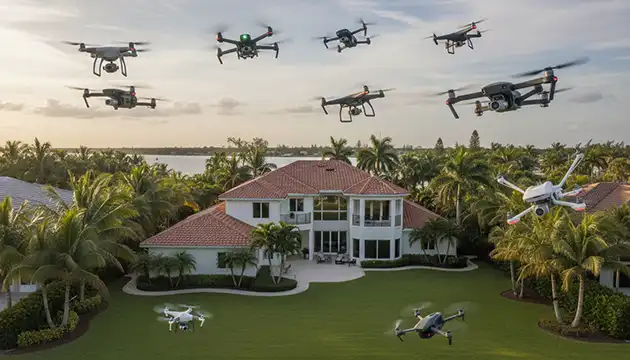
Most Florida property owners don’t want to become drone experts—they just want to know what’s okay, what’s not, and what to ask when a drone shows up. This guide walks through the key FAA rules that touch Florida neighborhoods, HOAs, and events, in plain language.
Who Makes the Rules: FAA vs. Property Owners
In the United States, the FAA controls the airspace—including the airspace above your house, HOA, or event venue. You own your land and buildings; the federal government regulates how aircraft (including drones) move in the sky.
As a property owner or HOA, you can control:
- Whether someone may take off or land a drone from your property or common areas
- Community rules about when and where drones may operate on HOA‑controlled land
- Contract terms when you hire a drone operator
You cannot override federal flight rules. Even if an HOA says “no drones,” that doesn’t give it authority to rewrite FAA safety rules or ban all legal flights passing over the community at a safe altitude.
Simple takeaway: you can set rules about taking off and landing on your property or common areas, but you can’t rewrite FAA safety rules or “ban” legal flights in the sky above.
Recreational vs. Commercial Flying (And Why It Matters to You)
Drones operate under two broad categories:
- Recreational flying – for fun only.
- Example: a teenager practicing in the cul‑de‑sac, a hobbyist filming beach sunsets for personal use.
- Commercial / Part 107 flying – any business purpose.
- Examples:
- Real estate listing photos or videos
- Roof inspections for an HOA
- Wedding or event coverage
- Marketing videos for a resort or landscaping company
- Examples:
If money, advertising, or business promotion is involved, it’s almost always commercial, and the pilot should be operating under the FAA’s Part 107 rules (licensed remote pilot).
For Florida property owners, that means:
- Most drones hired for real estate, HOA, or events are commercial and should be flown by a licensed pilot.
- You’re within reason to ask basic questions before allowing or hiring one.
Questions to ask:
- “Are you flying under Part 107?”
- “Do you have your remote pilot certificate and insurance?”
If the operator dodges those questions, that’s a red flag.
Basic FAA Rules That Apply in Neighborhoods and HOAs
Some core FAA rules apply almost everywhere, including residential areas:
- Visual line of sight – the pilot (or a trained visual observer) must be able to see the drone with their own eyes during flight.
- Altitude – standard maximum is 400 feet above ground level, with some limited exceptions.
- No careless or reckless flying – drones must be flown in a way that doesn’t endanger people or property and must stay well clear of other aircraft.
In Florida, many neighborhoods and HOAs are close to:
- Airports and heliports
- Hospitals with helipads
- Coast Guard or law‑enforcement aviation activity
That often means the airspace above is controlled. A drone filming homes near a busy airport might require FAA airspace authorization, even if every homeowner and the HOA said “we’re fine with it.”
As an owner/manager, you don’t need to know the details—but you can ask:
- “Have you checked the airspace for this location?”
- “Do you have the necessary authorization, if required?”
Flying Over People: What’s Allowed and What Isn’t
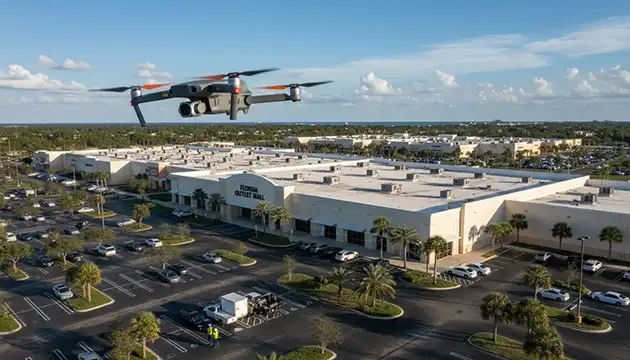
The FAA is especially concerned about drones falling onto people or flying too close to crowds.
In simple terms:
- Many commonly used drones cannot legally be flown directly over people who are not involved in the operation—especially in dense or moving crowds.
- Some lighter or specially approved drones offer greater flexibility, but the pilot must still follow specific FAA regulations.
How this plays out in real life:
- HOA block party on a cul‑de‑sac:
A responsible pilot may fly off to the side, keep altitude and distance, and avoid hovering directly above dancing kids or food lines. - Neighborhood 5K or charity walk:
Good practice is to fly beside or ahead of or behind the route at safe distances, not directly over the moving pack of runners or walkers. - Wedding or festival in a park or at the beach:
The drone should avoid dense groups, stage areas with overhead structures, and crowded dance floors, focusing on wider establishing shots.
Practical guidance:
- Ask the pilot: “How will you avoid flying directly over people who aren’t part of your crew?”
- Expect to see some stand‑off distance and angles that keep the drone away from the center of the crowd.
Night Flying and Special Waivers
Rules for night flying have changed over the last few years, which is why older online advice can be confusing.
Under current FAA rules, a licensed Part 107 pilot can fly at night if:
- The drone has proper anti‑collision lights that are visible from a long distance.
- The pilot has completed the FAA’s required night operations training as part of their certification or recurrent training.
In the past, special waivers were needed just to fly at night, so you may still see outdated guidance.
Common Florida scenarios where night flying comes up:
- Twilight or nighttime real estate shoots to capture pool and landscape lighting
- HOA holiday events, outdoor concerts, or fireworks
- Evening weddings and beach receptions
As an owner or planner, you can confidently ask:
- “Do you have the proper lighting on your drone for night operations?”
- “Are you current on the FAA’s night flying training?”
If the answer is vague or defensive, that’s cause to slow down and get clarity.
Events on Private Property: What Owners and Planners Should Check
Even when an event is on private property—a backyard, beach house, clubhouse, resort, or golf course—commercial drone operators must still follow FAA rules.
Common scenarios:
- A couple hires a drone for a backyard or beach wedding.
- An HOA brings in a drone to film a community event, like a fall festival or pool party.
- A corporate planner uses a drone at a resort or golf course event.
Minimum checklist for owners and planners:
- Confirm Part 107 certification
- “Can you send a copy or show your remote pilot certificate?”
- Ask about airspace/authorizations
- “Have you checked what airspace we’re in and whether any authorization is needed?”
- Discuss safety near people and structures
- “What’s your plan for staying clear of guests, tents, cabanas, and parked cars?”
- Confirm insurance
- “Do you carry liability insurance for your drone operations?”
You’re not being difficult you’re protecting your guests, your property, and your own liability.
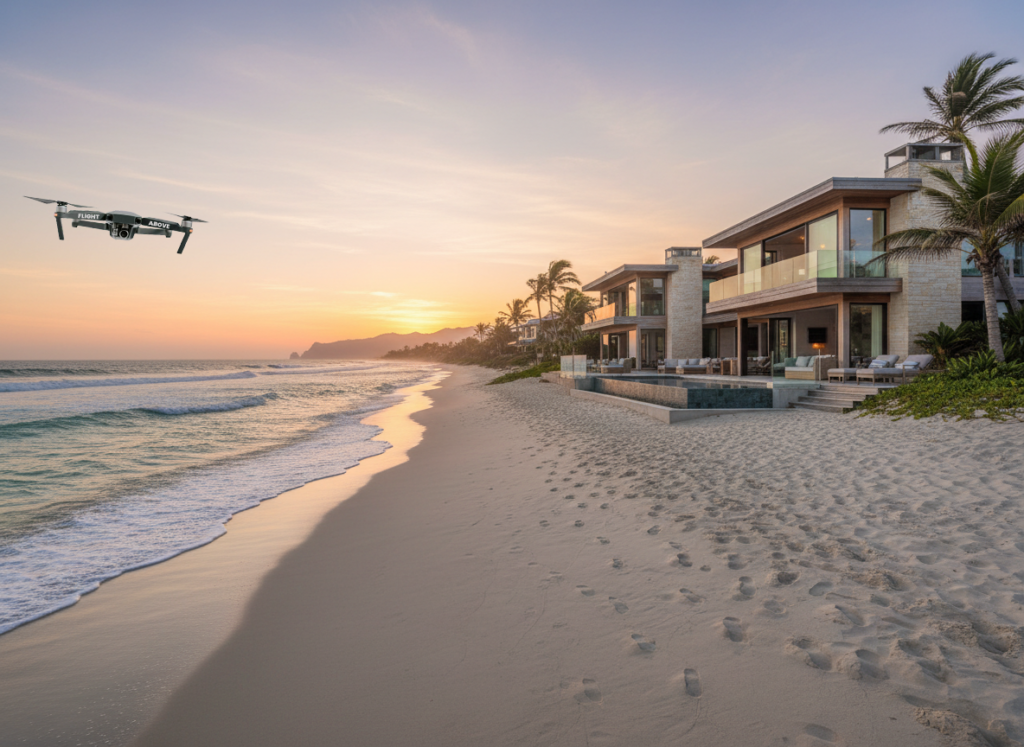
HOAs and Community Rules: What’s Reasonable HOAs have to balance safety, privacy, and federal rules.
In general, HOAs can:
- Set policies for launching and landing drones on common property (parks, pools, clubhouse areas).
- Establish reasonable “time, place, and manner” rules to reduce nuisance (for example, no drone takeoffs from the pool deck during posted quiet hours).
HOAs cannot:
- Create rules that conflict with federal safety regulations.
- Promise residents that “no one will ever fly over our community,” since legal transit flights can still occur in the sky above.
Best practices for HOAs include:
- Draft a simple, written drone policy covering noise, privacy, and safety expectations.
- Encourage residents and vendors to use licensed pilots for any commercial work.
- Clarify who to contact with concerns—management, the board, or local law enforcement if behavior appears reckless or harassing.
A clear policy helps prevent ad‑hoc arguments at the pool fence every time a drone is seen.
Privacy, Noise, and “What If I Don’t Want a Drone Here?”
FAA rules focus on safety, not privacy but property owners understandably care about both.
If you’re uncomfortable with a drone:
- Talk to the pilot or client first, if you know who they are.
- Calm, direct questions often solve the issue quickly.
- In communities, work through the HOA or management if the issue keeps coming up.
- If the flying is clearly reckless or harassing (very low over people, near windows, or repeatedly buzzing property), contact local law enforcement and describe the behavior.
What not to do: yelling, throwing objects, or trying to knock down a drone. That can be dangerous and may itself be illegal.
Simple, respectful scripts you can use:
- “Can you tell me who hired you and what you’re filming?”
- “Would you mind adjusting your shots so you’re not hovering so close to our windows/pool area?”
Most professional operators will work with you to adjust angles and distances.
Red Flags: When a Drone Operation Should Concern You
Certain behaviors should make any Florida property owner, HOA, or planner pause.
Red flags:
- The pilot refuses to answer basic questions about licensing or insurance.
- The drone repeatedly flies at eye level near people, vehicles, or windows when it doesn’t need to.
- The operator seems unaware of nearby airports, heliports, or hospitals.
- The drone is flown at night with no visible lights.
If you see this:
- Document time, place, and what you observed (photos or short clips can help).
- Reach out to the event organizer, homeowner, or property manager first if it’s tied to a specific event.
- If there’s an obvious safety risk, contact local authorities and focus on the behavior:
- “A drone is flying very low over people and traffic,” not just “there’s a drone.”
Simple Questions Florida Property Owners Should Always Ask
Whenever you hire or host a drone—whether for a listing, an HOA project, or an event—keep this checklist handy:
- Are you a licensed remote pilot under Part 107?
- Do you have insurance for your drone operations?
- Have you checked the airspace and any local restrictions for this location?
- How will you avoid flying directly over people who aren’t part of the shoot or event?
- If we’re flying near sunrise, sunset, or at night, are your lighting and training up to FAA standards?
You don’t need to memorize the entire FAA rulebook. If you understand these core ideas and ask these few questions, you’ll be in a strong position to host drone operations that are safe, legal, and genuinely beneficial for your neighborhood, community, or event.