Category: Retail Business

Retail Business Fly Through

  • 5 Ways Local Businesses in SWFL Use Drone Footage on Their Websites

    5 Ways Local Businesses in SWFL Use Drone Footage on Their Websites

    When someone lands on your website, you have just a few seconds to show who you are and why they should stay. Well‑placed aerial clips do that instantly for Southwest Florida businesses by showing location, scale, and professionalism in a way ground photos can’t.

    Aerial Footage as the Website “First Impression.”

    Your home page is often the first and only page visitors see. A short aerial clip can immediately show:

    • Where you are: near the beach, on a canal, off a main road, inside a golf community, or in a suburban plaza.
    • What your property looks like from above: parking layout, entrances, outdoor seating, docks, pool areas, or shopfronts.

    Many local businesses use:

    • looping header video (muted) is behind the main text on the home page.
    • A short aerial montage instead of a single static hero image.

    For example, a waterfront restaurant might use a 10‑second flyover that starts over the water, passes over the outdoor deck, and settles on the building and docked boats. A boutique real estate office near the Gulf might open with a quick coastal skyline shot, then dip down to show the office nestled between neighborhoods it serves. In both cases, visitors know “where” and “what” within seconds.

    Property and Project Showcases for Service Businesses

    Service businesses in SWFL—roofers, landscapers, pool builders, solar installers, contractors—often win or lose work based on how convincingly they can show past projects.

    On “Our Work” or “Project Gallery” pages, and on individual case‑study pages, drone clips can:

    • Show before‑and‑after views of roofs, landscape installs, or full exterior remodels.
    • Highlight scope and quality with short flyovers of completed jobs: a full re‑roof on several HOA buildings, a complete backyard transformation, or a solar array on a multi‑unit complex.

    From a visitor’s perspective, this makes it much easier to:

    • Quickly see the scale of projects you handle (single homes vs. whole communities).
    • Visualize the end result far beyond what a close‑up photo of a patio or shingles can convey.

    Instead of saying “we handle large projects,” you show an entire row of finished roofs or a full property makeover in one smooth pass.

    Location, Directions, and “Know Before You Go” Content

    In busy or tourist‑heavy parts of SWFL—downtowns, beach corridors, and highway plazas—just finding the right driveway can be a challenge. Aerials can remove that friction.

    Businesses use overhead visuals to:

    • Show the parking layout and which lots or garages are available.
    • Clarify which unit or building is theirs in a strip center or multi‑building plaza.
    • Highlight nearby landmarks like beach access points, main intersections, hotels, or marinas.

    A short aerial clip or annotated screenshot works well on:

    • Contact” or “Visit Us” pages.
    • FAQ sections about parking and access (“Where do I park?” “Which entrance do I use?”).

    This helps first‑time visitors, tourists, and delivery drivers alike. A quick overhead view can prevent missed turns, last‑minute texts, and late arrivals, which reduces frustration before people even walk through your door.

    Community and Lifestyle Sections for Realtors and Hospitality

    Real estate teams, small resorts, vacation rentals, and planned communities sell more than just a structure—they sell a lifestyle. Drone footage is perfect for that.

    On “Neighborhood,” “Lifestyle,” or “Area Guide” pages, aerial clips can:

    • Showcase amenities: pools, clubhouses, tennis courts, marinas, dog parks, and golf courses.
    • Highlight proximity to beaches, parks, and main shopping/dining areas.
    • Tie together several key spots in a short “this is what it’s like here” video.

    Typical styles that work:

    • A smooth flyover down a golf fairway, then a gentle pan to the clubhouse, pool, and surrounding homes.
    • A coastal shot starting over a canal and docks, then gliding toward the beach access, showing how walkable or boat‑friendly the area is.

    This type of content keeps visitors on your site longer and helps out‑of‑area buyers or guests quickly understand what staying or living in your part of SWFL actually feels like.

    Trust‑Building: About, Careers, and “Why Choose Us” Pages

    Some of the best places to use drone footage are pages most owners overlook: AboutCareers, and Why Choose Us.

    Used here, aerial clips can:

    • On “About Us,” show your office, yard, or shop from above to give a sense of scale and legitimacy.
    • On “Careers”: Highlight real job sites or service areas to attract recruits who want to see the type of work and environments they’ll be in.
    • On “Why Choose Us”: Provide visual proof of safety and professionalism—organized job sites, clean trucks, proper equipment, and tidy staging.

    Businesses often:

    • Embed short background clips next to text about experience, service area, or safety culture.
    • Use muted B‑roll of job sites behind testimonials or key selling points (“We’re organized,” “We respect your property”).

    This turns generic promises into visible evidence. Instead of just claiming “we’re professional and careful,” your site quietly shows it.

    Implementation Tips for Non‑Technical Owners

    You don’t need to overhaul your entire site to benefit from drone content. A few targeted moves go a long way.

    Clip length and formats:

    • Use 10–20 second loops for headers and background sections so pages load quickly and don’t feel overwhelming.
    • Use 30–90-second highlight videos on project, gallery, or “About” pages when users are willing to watch a bit longer.

    Simple next steps:

    • Identify 2–3 key spots on your site where people decide to call, book, or request a quote (home page, service page, contact page). Consider placing aerial footage there first.
    • Ask your web person or platform support, “How can we add a video header here?” or “How do we embed a short clip from our video host?” Most modern website builders support this without major redesigns.

    Make it easy to understand and load:

    • Add captions or short text overlays, such as “Waterfront dining,” “Full HOA re‑roof,” or “5 minutes to beach access,” so viewers immediately know what they’re seeing.
    • Keep file sizes reasonable and use web‑optimized formats so pages still load quickly on mobile, where most people browse.

    You don’t need a huge budget, a complex website, or long videos to see a difference. A few well‑placed, purposeful aerial clips can dramatically upgrade how your Southwest Florida business looks and feels online—and, more importantly, help turn casual visitors into actual calls, bookings, and quote requests.
  • How Aerial Videos Help Real Estate and Service Businesses Stand Out​

    How Aerial Videos Help Real Estate and Service Businesses Stand Out​

    Aerial video gives local businesses something they rarely get from traditional marketing: a way to demonstrate value in seconds rather than just talking about it. For realtors, roofers, and landscapers in Southwest Florida, that extra layer of clarity and polish often translates directly into more calls, more showings, and better clients.

    Why Aerial Video Works So Well for Local Businesses

    When someone scrolls past a listing or ad, a sweeping aerial shot immediately feels different from a standard phone photo. People tend to click aerial videos more, watch them longer, and remember them better because they show the “big picture” in a way our brains find satisfying. That extra attention translates into more listing views, more estimate requests, and more people saving or sharing your content.

    Most importantly, aerial video doesn’t just look nice—it communicates space, scale, and professionalism. It shows how a home sits on its lot, how a roof project was organized, or how a landscape design ties the whole property together. Ground photos struggle to do that, which is why businesses that use aerials consistently get perceived as more established and more careful about quality.

    For Realtors: Turning Listings into Experiences

    For agents, aerial video turns a listing from “pictures of rooms” into an experience of the property and neighborhood.

    Well-planned aerials let you:

    • Show the full layout: house, yard, pool, driveway, garages, outbuildings, and waterfront or golf frontage in one view.
    • Put the home in context: proximity to water, parks, schools, downtown, and how quiet or busy the street is.
    • Highlight features that are hard to convey from eye level, such as large corner lots, cul‑de‑sacs, long driveways, or privacy from neighbors.

    Typical shots that work:

    • A slow orbit around the home to show it from all sides.
    • A fly‑in from the street or waterway that “arrives” at the front door or pool.
    • A pull‑back reveal that starts tight on the home and then rises to show the whole neighborhood.

    That approach helps attract out‑of‑area buyers who can’t easily visit, because they can quickly understand how the property feels in its surroundings. It also sets your brand apart: when you can say, “This is the level of marketing I bring to every listing,” it’s easier to win listings over agents who still rely on basic photos.

    A common pattern: a listing with average photos sits with low traffic; once a simple aerial video is added, showing, say, the lake behind the home and the nearby park, online engagement and showings jump because buyers finally see the full value.

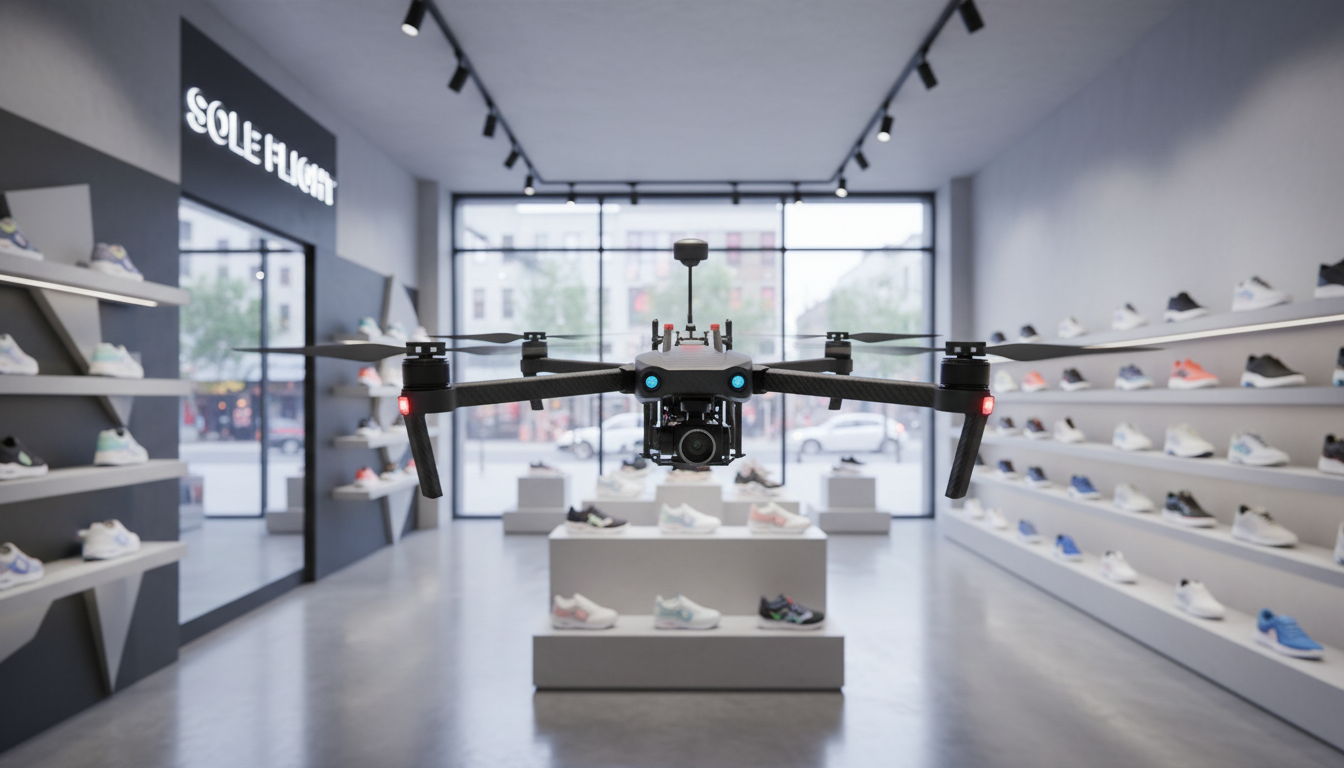
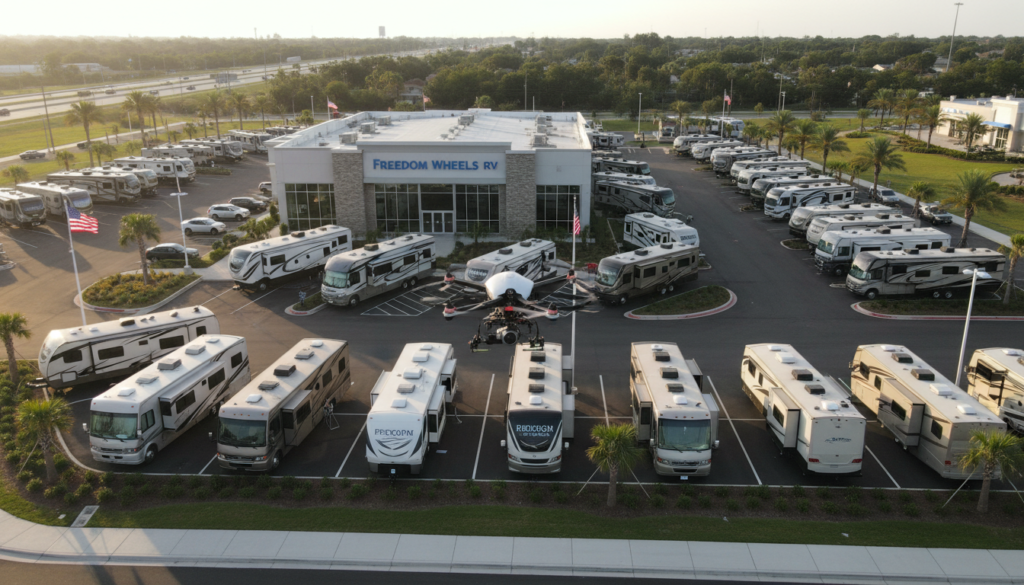
    RV Dealership fly over and through

    For Roofers: Showing Safety, Quality, and Scope

    For roofing companies, aerial video is less about “pretty views” and more about proof.

    Good aerial footage can:

    • Show crews working with harnesses, safety lines, cones, and clean job sites—reassuring owners and HOAs that you take safety seriously.
    • Demonstrate the scale and complexity of roofs you handle: steep pitches, multi‑building complexes, and large re‑roof projects after storms.
    • Capture before‑and‑after stories where the improvement in shingles, tiles, or metal is obvious from above.

    Roofers can use this content:

    • Their website shows that they routinely manage large or high‑end projects, not just small repairs.
    • In proposals to HOAs and property managers, where boards want to see how you operate in a real community.
    • On social media to highlight storm response, re‑roof projects, and community work in an easy‑to‑understand way.

    For roofers, aerial video is really about trust: owners and boards want visual proof that a company is organized, safe, and experienced, not just the lowest bid on a spreadsheet.

    For Landscapers: Bringing Design and Maintenance Work to Life

    Landscaping is all about the whole picture, and aerial video is the best way to show that.

    From above, you can:

    • Reveal full‑property designs: beds, lawns, trees, lighting, hardscaping, and water features as one unified design instead of separate snapshots.
    • Show true before‑and‑after transformations across entire yards or commercial sites, not just one flower bed.
    • Highlight patterns and lines, mowing stripes, hedge layouts, symmetry, and flow that simply don’t read well from ground shots.

    This helps landscapers:

    • Sell higher‑ticket design/build work by letting prospects “walk” a finished project from above.
    • Attract communities and commercial clients who care about overall property presentation and want to see that you can handle large areas.
    • Stand out on visual platforms like Instagram, Facebook, and YouTube, where a smooth, well‑composed flyover is far more shareable than a single still photo.

    A classic sequence: a smooth flyover starting at the street, rising to show the full property, then gliding over key areas, entry, lawn, pool, patio, planting beds, so viewers understand the design and workmanship in one pass.

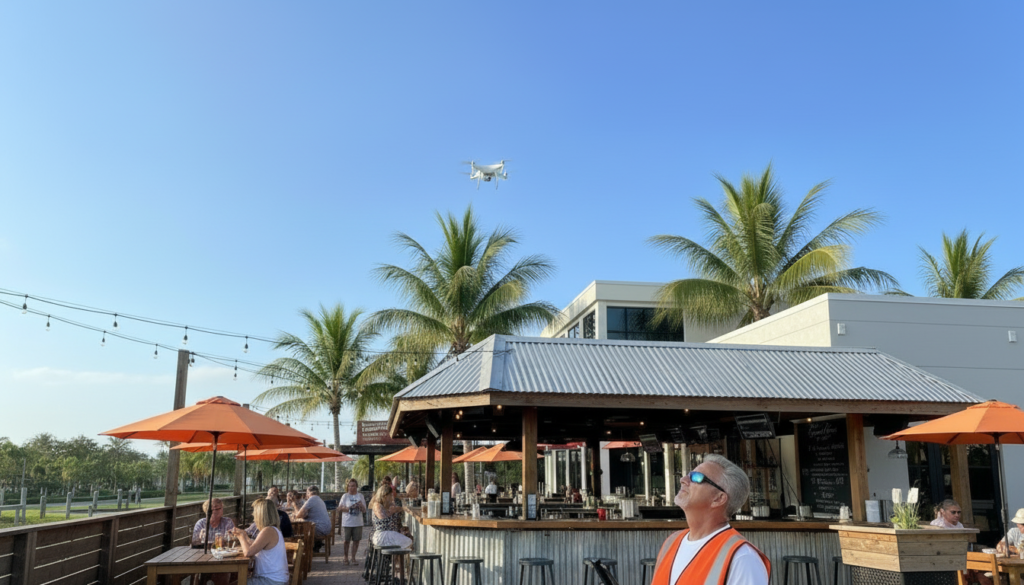
    drone pilot flythrough and over restaurant

    Storytelling Basics: What Makes an Effective Aerial Video

    The best aerial videos tell a simple story instead of stitching together random shots.

    A good structure is:

    • Beginning – Arrive: show where we are (street, water, community).
    • Middle – Explore: move around the property and highlight key features.
    • End – Reveal: pull back or rise up to show the big picture.

    Practical tips:

    • Keep clips short and steady; slow, controlled movements look more professional than fast spins or constant direction changes.
    • Mix wide establishing shots with closer angles so viewers can appreciate both the setting and the details.
    • Whenever possible, shoot during good natural light (morning or late afternoon) so homes, roofs, and landscapes look their best.

    You don’t need complex editing or flashy effects. Clean, stable, well‑framed footage with simple cuts is often enough to make your audience feel polished and high-end.

    Where and How to Use Aerial Videos for Maximum Impact

    To get real business value, you want your aerial videos working in several places at once.

    Key uses:

    • Real estate listings (within local/MLS rules), with longer versions hosted on YouTube or Vimeo.
    • Company websites use hero videos on the home page or feature videos on service and case‑study pages.
    • Social media: short clips for Reels, Stories, and regular posts.
    • Email campaigns and proposals, where a single thumbnail and link can instantly enhance how your brand is perceived.

    Repurposing strategy from one shoot:

    • A main 60–90 second “hero” video that tells the full story.
    • Several 10–20 second vertical or square clips for social media.
    • Individual screenshots for still photos, thumbnails, and website imagery.

    Using aerial video consistently—rather than as a one‑off—reinforces the idea that your business operates at a higher standard and pays attention to detail.

    faa certified drone pilot

    Compliance and Professionalism: Why Hiring a Pro Matters

    Any commercial drone work in the U.S. must be done by a properly licensed remote pilot. A professional operator will also handle airspace checks, safe distances, and other regulatory details so you’re not exposed to avoidable risk.

    This matters for your business because unlicensed or unsafe flying:

    • Can create liability issues if there’s an accident near people, vehicles, or neighboring property.
    • Reflects poorly on your brand if neighbors or clients see reckless operation tied to your name.

    When choosing a provider, look for:

    • Proof of licensing and appropriate insurance.
    • A portfolio with examples specifically for real estate, roofing, or landscaping.
    • Clear communication about the plan, timeline, shot list, and what final files you’ll receive.

    You want someone who understands both how to fly and what your customers actually care about seeing.

    Measuring the Impact: From “Nice Video” to More Business

    Aerial videos shouldn’t just collect “likes”; they should drive real results.

    Think in terms of:

    • For realtors: more showings, faster offers, and stronger listing presentations that help win future sellers.
    • For roofers: higher close rates on HOA and large projects, and easier sales on premium options because prospects have seen your quality.
    • For landscapers: more inquiries for full‑property projects and more referrals as people share impressive project videos.

    Simple tracking ideas:

    • Use specific links when you share videos in listings, ads, or emails, and monitor clicks and inquiries.
    • Ask new leads how they found you and note when they mention video or social media.
    • Compare engagement and inquiries on listings or posts with aerial video versus those without.

    Over a few months, you’ll see patterns that tell you where aerial content pays off the most.

    Getting Started: Practical First Steps

    You don’t need a big production to get real value; you need the right projects and a clear plan.

    A simple roadmap:

    1. Identify 2–3 “signature” properties or jobs that represent your ideal work.
    2. Partner with a qualified drone pilot or creator who understands your industry.
    3. Plan a short shot list based on what your buyers or clients care about most (e.g., view, roof quality, overall design).
    4. Decide ahead of time where the video will live on the website, listings, and social, so it’s shot and edited in the right formats and lengths.

    With that in place, aerial video becomes a repeatable tool in your marketing, not a one‑time experiment. Used consistently, it helps you stand out, build trust faster, and close more of the right kind of clients in a competitive market like Southwest Florida.