Category: Uncategorized

  • The Four-armed toaster descending rapidly

    The Four-armed toaster descending rapidly

    If you stood in a park in 2013 and saw a white, plastic, four-armed toaster descending rapidly toward a duck pond, that was probably me.

    Back then, being a “drone pilot” wasn’t a career path; it was a high-stakes hobby for people who enjoyed the feeling of burning money in mid-air. Fast forward to today, and I’m a Part 107 FAA-certified commercial pilot, navigating complex airspace and capturing cinematic data for industries I didn’t even know existed a decade ago.

    It’s been a wild ride. Let’s spool up the motors and head back to the beginning.

    The Phantom Menace (Circa 2013)

    In 2013, DJI released the Phantom 1. It was the Volkswagen Beetle of the sky—clunky, iconic, and prone to spontaneous decisions.

    There was no “Lightbridge” or “OcuSync.” There was no live video feed on your phone. To see what the drone saw, you had to bolt on a GoPro Hero 3 and hope for the best. If you wanted a “First Person View” (FPV), you had to solder a 5.8GHz video transmitter onto the internal motherboard, strap a mushroom antenna to the bottom, and wear a pair of bulky goggles that made you look like a low-budget cyborg.

    The Experience: Flying the original Phantom was an exercise in pure anxiety. It didn’t have vision sensors or obstacle avoidance. If it drifted toward a tree, it was going to hit that tree.

    The most terrifying feature? The Flyaway. Early GPS modules were… optimistic. Occasionally, the Phantom would decide its true home was in a different zip code and simply bolt for the horizon. You’d stand there, controller in hand, watching your $1,000… investment become a very expensive UFO.

    Pro Tip from 2013: If the LED on the back started blinking yellow, you didn’t check the manual. You ran.

    The Golden Age of “Wait, Is This Legal?”

    As we moved into the Phantom 2 and 3 era, the technology improved. We used 3-axis gimbals, so the footage didn’t look like it was filmed during an earthquake. This was the “Wild West” phase.

    I spent those years learning the hard way. I learned that seagulls are remarkably territorial. I learned that “Return to Home” is a suggestion, not a law of physics.

    Most importantly, I learned the Zen of the Crash. If you fly enough, you will eventually turn your drone into confetti. The mark of a true pilot isn’t crashing; it’s knowing how to rebuild the shell with zip ties and sheer willpower.

    I started getting a few requests. A friend wanted a shot of their roof. A local realtor wanted a “cool angle” of a backyard. There were no real rules yet, just a vague sense that the FAA was watching and that I should probably stay away from airports.
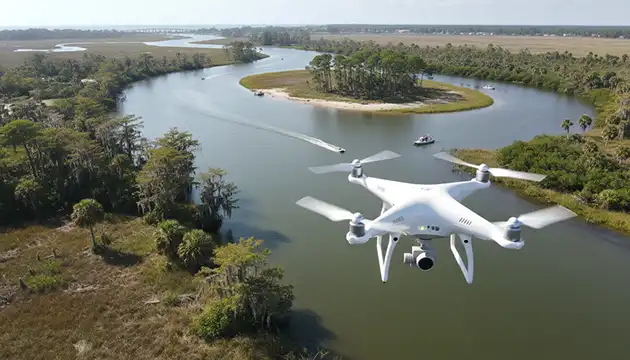
    dji phantom 3 drone flying over florida river

    The Shift: Professionalism and the Part 107

    Everything changed on August 29, 2016. That was the day the FAA implemented Part 107, the Small UAS Rule. Suddenly, “drone guy” became “Unmanned Aircraft Systems Pilot.”

    So, I spent 11 years enjoying being the drone guy. Through different drones over the years, I learned to repair them as much as to fly them. I was the nerd who traveled with a drone and a video camera on vacations…

    The transition from hobbyist to pro isn’t just about buying a more expensive drone. After 11 years of navigating the skies as a dedicated hobbyist, I decided it was time to turn my passion for flight into a career.

    Moving beyond the casual weekend fly-ins, I retired my “amateur” status to master the technicalities and regulations required for formal certification.

    Now, I’ve officially transitioned from a long-term drone enthusiast to a fully licensed pilot, ready to bring over a decade of aerial experience to the professional industry.

    It was a mental shift. I had to stop thinking about “flying for fun” and start knowing the rules about National Airspace (NAS).

    The Study Grind: To get my license, I had to stop looking at the clouds and start looking at sectional charts. I had to learn:

    • Weather Theory: Why “Density Altitude” matters (spoiler: thin air makes drones sad).
    • Radio Communications: Understanding what “Cessna 172 on the downwind for runway 24” means for my little plastic quadcopter.
    • Airspace Classes: Knowing the difference between the “free-for-all” of Class G and the “ask for permission” gates of Class B, C, and D.

    Passing that exam was one of the proudest moments of my career. I wasn’t just a guy with a remote; I was a federally recognized airman.
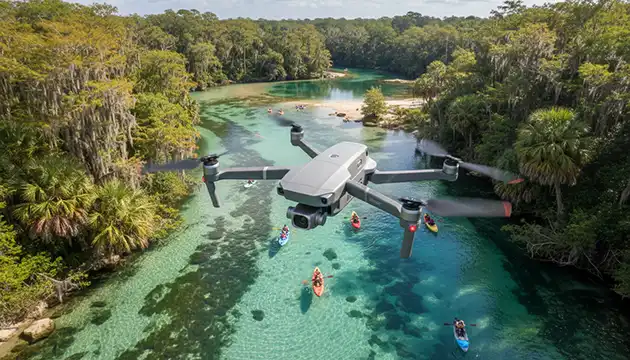
    dji mavic 3 drone flying over florida crystal spring river

    A Day in the Life of a Commercial Pilot

    Today, my kit looks a bit different. Gone is the “toaster” Phantom.

    Being a pro pilot is 20% flying and 80% logistics. Oh yeah, that’s before I went into business. It’s now 25% flying, 45% logistics, and 30% editing! Before the props even spin, I’m doing:

    1. LAANC Authorization: Getting instant digital permission to fly near airports.
    2. Pre-flight Inspections: Checking every prop for hairline fractures.
    3. Risk Mitigation: Ensuring I’m not hovering over people or moving vehicles, checking for Power lines in the area. Google Earth has become my new friend…

    I’ve flown over construction sites and done cinematic sweeps of cars. It’s high-pressure, precision work. When you’re flying $ 1,000s of dollars 200-plus feet in the air, you don’t get “oops” moments anymore. I have lost my share! And BTW, drones don’t float, unfortunately.

    Why We Do It

    Despite the regulations, the paperwork, and the occasional stress of a low-battery warning over the gulf, there is something magical about it.

    Drones give us a perspective that was previously reserved for birds and the very wealthy. There’s a certain “flow state” you hit when the gimbal is smooth, the light is hitting the horizon just right, and you’re carving a path through the air. You aren’t just operating a machine; you’re an eye in the sky.

    From the 2013 Phantom I once accidentally landed on my neighbor’s shed to the FPVs I run today and the FAA-certified operations I manage, the journey has been about more than just technology. It’s been about the evolution of a new way to see the world.
  • How to Choose the Right Drone Service in South West Florida​

    How to Choose the Right Drone Service in South West Florida​

    Most people shopping for drone services in Southwest Florida don’t care what model is in the air—they care whether the job is done safely, on time, and in a way that actually helps them sell, document, or market a property. Choosing the right provider is about process and professionalism, not gadgets.

    Why Picking the Right Drone Service Matters More Than the Drone Itself

    When buyers ask, “What drone do you use?” they’re usually asking the wrong question. The better questions are about safety and compliancereliability and communication, and how well the provider understands your business goal—whether that’s selling a Gulf‑side listing faster, winning an HOA contract, documenting a roof, or promoting a local business.

    Two companies with similar drones can deliver completely different results and risk levels. One may give you clean, properly framed footage, clear labeling, and an easy process; the other might show up late, ignore neighbors, and hand you a jumble of files you can’t use. A professional drone service should feel like working with a good contractor or photographer you trust—not a hobbyist with a toy.

    Credentials That Actually Matter (And How to Verify Them)

    For any paid work, the basics matter far more than brand names:

    • A valid FAA Part 107 remote pilot certificate for commercial flying
    • Insurance that covers drone operations, ideally as part of their general liability or a specific aviation/drone policy

    You don’t have to dig into regulations. Just ask:

    “Can you send over your Part 107 certificate and proof of insurance with your proposal?”

    In Southwest Florida—where you’re often dealing with higher‑value homes, HOAs, golf communities, and busy airspace—these aren’t optional. They’re the minimum bar for taking a provider seriously.

    Process Transparency: What a Professional Workflow Looks Like

    A good drone business can explain “how this will work” in a few simple steps. A typical, professional workflow looks like:

    1. Discovery call
      They ask what you’re trying to achieve:
      • Sell a listing faster?
      • Should an HOA board show the condition of all roofs?
      • Document construction progress?
      • Create a short promo for a small business?
    2. Site and airspace check
      They confirm the address, look at nearby airports or heliports, and let you know if there are any constraints on how or when they can fly.
    3. Clear scope and pricing
      You get a written description of:
      • What will be captured (e.g., 20–30 edited photos, a 60–90 second video, raw imagery for inspection).
      • How long will it take on-site?
      • What you will receive and in what formats.
    4. Shoot day plan
      They tell you when they’ll arrive, where they’ll take off and land, and how they’ll work around residents, guests, traffic, or golfers.
    5. Post‑production and delivery
      They edit, label, and deliver files so you can actually use them—properly named photos, exported videos ready for MLS, social, or your website.

    If someone’s approach is essentially “I’ll show up and figure it out,” that’s a red flag. A professional can walk you through this process in plain English before you sign anything.

    Hight up drone fly over fields of fruit

    Behind‑the‑Scenes Professionalism: What You Don’t See But Should Ask About

    You won’t see most of the serious work a professional pilot does—but you can ask about it without being technical. Quiet, important tasks include:

    • Checking the airspace and weather before and during the job
    • Bringing backup batteries, memory cards, and equipment
    • Using pre‑flight checklists and keeping basic flight logs
    • Planning around people, cars, roofs, and neighbors to avoid problems

    Easy, non‑technical questions that reveal a lot:

    • “What do you do if the weather changes or there’s an issue with your drone on site?”
    • “How do you plan your flights around people, roads, and neighboring homes?”

    You’re not looking for jargon—just evidence that they clearly have a plan and have thought these things through before.

    Matching the Service to the Job: Real Estate, Roofs, HOAs, and Local Businesses

    Different jobs call for different strengths. A strong provider will show you they understand that.

    • Realtors
      Need attractive, storytelling visuals:
      • Full layout of the home, pool, and lot
      • Neighborhood context (water, golf, schools, downtown)
      • Smooth, inviting shots that make buyers want to book a showing
    • Roofers and inspectors
      Need sharp, organized documentation:
      • Close‑ups of ridges, edges, penetrations, and damage
      • Labeled images tied to specific roof areas
      • Deliverables that are easy to pass to adjusters or internal estimators
    • HOAs and property managers
      Need consistent coverage across many buildings:
      • Systematic imagery of all roofs and elevations
      • Clear summaries that they can show boards and owners
      • Repeatable inspections year over year
    • Local businesses (restaurants, gyms, shops, resorts)
      Need short, punchy marketing clips:
      • Location and access (parking, nearby landmarks)
      • Curb appeal and outdoor spaces
      • Atmosphere during operating hours

    When you review portfolios, look specifically for projects like yours—Gulf‑side homes, condo buildings, golf communities, construction sites—not just random landscape or travel shots.

    badge fully insured and certified

    How to Compare Proposals Without Being a Tech Expert

    When you have two or three quotes, compare them using three simple columns:

    1. What I get
      • How many photos?
      • How long is the finished video?
      • Are edits included, or is it “raw only”?
    2. When I get it
      • Turnaround time in days
      • Any rush options and their cost
    3. How much does it costs
      • Total price
      • Any add‑ons (extra edits, extra locations, rush fees)

    Also, check whether the proposal spells out how you can use the content:

    • Website and social media
    • MLS and print marketing
    • Internal reports or board packages

    A very low price with no clear scope, timeline, or mention of licensing/insurance can become expensive later if you need to reshoot, if the content isn’t MLS‑compliant, or if there’s an incident on site.

    Communication and Fit: Signs You’ll Have a Smooth Experience

    Good providers are easy to talk to and make you feel calmer after the call, not more confused.

    Positive signs:

    • They listen first, ask clarifying questions, and then restate your goals in their own words.
    • They explain limits (airspace, weather, safety) in a straightforward way, not as excuses.
    • They set expectations: what’s possible at a Gulf‑side home, near a busy road, or next to a golf fairway.

    Soft red flags:

    • Slow, sloppy, or one‑line responses to detailed questions.
    • Pressure to “book now” without answering basic concerns.
    • Brushing off safety or rules questions with “don’t worry about it” or “we do this all the time” without details.

    If communication feels off before you hire them, it rarely gets better later.

    Red Flags and “Gut Check” Moments

    Certain things should make any Southwest Florida client pause, whether it’s for a $300 shoot or a large HOA contract:

    • No written estimate or scope—only a price in a text message.
    • Refusal to provide proof of licensing or insurance.
    • Casual attitude about flying close to people, roads, screened lanais, or neighboring homes.
    • Overpromising risky shots (very low passes over crowds, tight fly‑throughs under lanais or between buildings) without talking through safety.

    If you’re unsure:

    • Get a second quote from another provider.
    • Ask for a short call to walk through your concerns.
    • Trust your gut—if someone feels careless, don’t put your property, residents, or reputation in their hands.
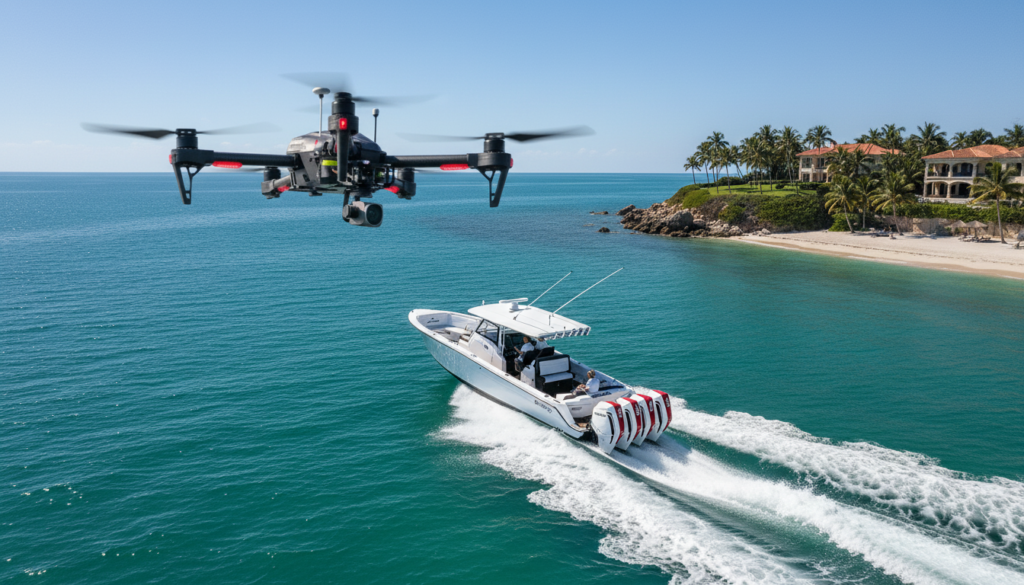
    4 engine boat drone flyover

    Questions Every SWFL Client Should Ask Before Hiring

    Here’s a copy‑and‑paste checklist you can send to any potential provider:

    • “Are you licensed under Part 107, and can you send proof?”
    • “Do you carry insurance for your drone work?”
    • “Have you done projects like mine (real estate/roof / HOA / business promo) before?”
    • “What will I receive exactly (number of photos, video length, formats), and when?”
    • “How do you handle airspace checks, weather, and safety around neighbors or guests?”

    Their answers—and how quickly and clearly they respond—will tell you almost everything you need to know.

    Reassurance: You Don’t Need to Be Technical to Make a Smart Choice

    You don’t need to know camera specs, drone models, or editing software to choose a great drone service. If you focus on process, professionalism, and clarity, you’ll naturally filter out most of the risk and end up with better results.

    A good drone provider in Southwest Florida will make you feel informed and comfortable, walk you through the steps in plain language, and deliver exactly what you need to look good to your buyers, residents, boards, or customers—without you ever needing to learn the technical side.