
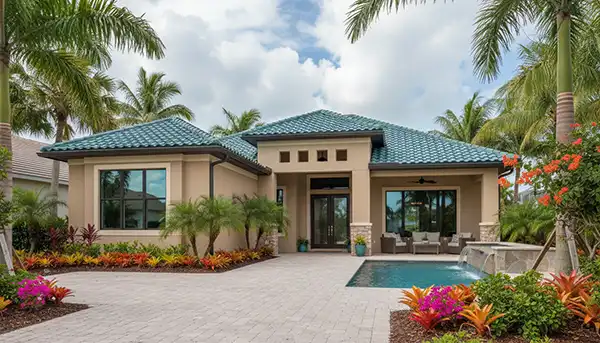
Coastal homes in Southwest Florida live in a harsher environment than most people realize, and the damage starts earlier and more subtly than you can see from the driveway. Drone inspections give you a safe, detailed way to monitor hidden wear before it leads to leaks, major repairs, or insurance surprises.
Coastal Reality in SWFL
Along the SWFL coast from Naples north, homes sit in a constant mix of salt‑laden air, strong sea breezes, summer thunderstorms, and repeated tropical systems. Roofs and exteriors also take year‑round, nearly vertical sun and intense UV. Compared to inland properties, this combination accelerates wear on shingles, tiles, metal roofs, fasteners, sealants, stucco, and paint.
What makes coastal degradation tricky is that it is initially faster and more subtle. A roof can look “fine” from the street while fasteners rust, coatings chalk, and tiles start to crack up high near ridges and edges. Aerial inspections are uniquely valuable here because they let you routinely see the areas that age first, in enough detail to catch problems early. Salt Air: Corrosion and Hidden Damage
Salt air and salt spray are relentless around the coast. Fine salt particles land on:
- Metal roofs and trim
- Fasteners and flashing
- Drip edges, gutters, and railings
- Rooftop HVAC units, vents, and solar mounts
Over time, that salt attracts moisture and accelerates corrosion. Rust often starts in tucked‑away spots: behind parapets, under overhanging tiles, along eaves, in roof‑to‑wall transitions, or on the backside of metal edges—places you can’t see well from the ground or even from a single ladder position.
A drone can hover right where the damage starts. High‑resolution, close‑up images reveal:
- Early rust blooms on fasteners and flashing
- Oxidation and bare spots where metal coatings are failing
- Rust trails running down from compromised screws or brackets
For HOAs and property managers, consistent drone flights across multiple buildings make it easy to spot patterns, such as one elevation receiving more salt spray due to prevailing winds, and to plan targeted maintenance rather than waiting for leaks.
Wind Exposure: Uplift, Loose Components, and Storm Readiness
On the SWFL coast, steady sea breezes are just the baseline. Add in daily summer thunderstorms, occasional strong cold fronts, and the real risk of tropical storms and hurricanes, and your roof sees repeated wind loading year after year.
That repeated loading gradually:
- Loosens shingles or tiles
- Lifts edges and flashing
- Displaces ridge caps, soffits, and fascia components
From the street, the home may look perfectly normal. From above, you can see shingle tabs not lying flat, tiles slightly out of alignment, or flashing that has just started to lift.
Drones are ideal because they:
- Detect subtle uplift or displacement you’d never notice from ground level
- Scan entire roof fields quickly after a wind event to find new issues before the next storm
- Document pre‑storm conditions so you have clear “before” evidence if you ever need to file a claim
For example, after a strong wind event in a coastal community, a drone survey of several streets showed lifted shingle leading edges on multiple roofs that appeared fine from the driveway. Those owners could re‑secure or repair before the next storm turned “minor uplift” into missing shingles and water intrusion.
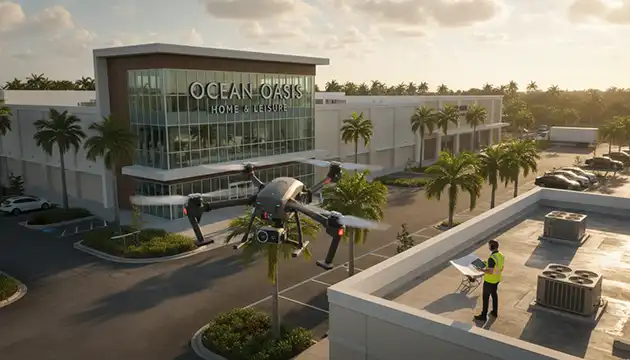
Roof Materials in Coastal SWFL: Why Aerial Detail Matters
Coastal SWFL uses a mix of roof types, and each reacts differently to salt, wind, and sun.
- Concrete/clay tile
Tiles can develop cracked corners, slipped pieces, and broken ridge caps. Strong winds and foot traffic can expose the underlayment, especially near ridges and hips. From above, a drone clearly shows patterns of broken tiles and any areas where underlayment is visible. - Metal standing seam or 5V
These roofs resist wind very well but are vulnerable to coating failure and fastener corrosion in salt air. Fasteners can rust, seams can open, and panels can loosen over time. Aerial oblique views reveal rust streaks, loose screws, lifted seams, and failing sealant along ridges and edges. - Architectural shingles
Shingles suffer from granule loss due to UV and wind, lifted tabs, and nail pops. Early granule loss can be seen as lighter, smoother patches from above, long before you’d notice it looking up from the yard. Drones capture the overall pattern so you can distinguish normal aging from unusually fast wear in specific zones. - Flat roofs (TPO, modified bitumen, etc.)
Common on condos and commercial buildings, these roofs can develop ponding water, seam failure, and blistering. From above, drones easily capture ponding patterns, wrinkled seams, and soft, blistered areas that are nearly impossible to see from the ground.
Top‑down and angled drone views reveal not just isolated defects, but patterns: repeated broken tiles near ridges facing the gulf, rust trails in one corner, or consistent ponding near certain drains. That makes it easier to distinguish normal aging from early failure that needs attention now.
Intense Sun and UV: Accelerated Aging from Above
SWFL’s sun is brutal on building materials. Intense UV exposure:
- Breaks down shingles, sealants, and coatings faster than in cooler, cloudier regions
- Causes chalking and fading on metal and flat roof membranes
- Makes plastics and sealants brittle and more prone to cracking
Drone inspections shine here because you can fly the same property on a consistent path year after year. When you compare images over time, you can actually see:
- Shingles losing granules and darkening or lightening in specific areas
- Metal roof coatings are shifting from glossy to chalky, with bare spots starting to appear
- Flat roof membranes going from smooth to crazed, blistered, or discolored
By spotting these changes early, owners can re‑coat, seal, or repair before UV damage turns into leaks. Periodic aerial “health checks” are a practical way to stay ahead of Florida’s accelerated aging curve.
Safety and Access on Coastal Properties
Many coastal roofs are simply not convenient—or safe—for frequent ladder inspections:
- Steep pitches and complex designs
- Multi‑story homes perched near seawalls or canals
- Tight side yards, dense landscaping, and pool cages blocking ladder placement
For older residents, property managers, and out‑of‑area owners, the last thing you want is multiple trades climbing all over a fragile tile or metal roof just to “take a look.”
Drones reduce that risk dramatically. A single flight can:
- Cover all roof slopes, ridges, valleys, and gutters without anyone leaving the ground
- Inspect upper elevations, chimney areas, stucco cracks, and soffit conditions without dragging a ladder through landscaping
- Provide clear visuals for contractors so they only climb when there is a specific, necessary task
You get better information with less wear and tear on the structure and far less liability.
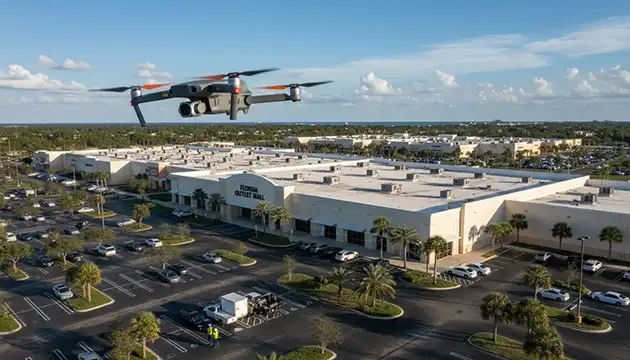
Documentation for Insurance, HOA, and Resale
Coastal properties often have higher premiums and stricter underwriting because insurers know the risks. Clear, dated imagery from above is a powerful tool for:
- Insurance
- Providing baseline documentation for applications and renewals
- Showing “before” and “after” conditions around storms, making claims smoother and more credible
- HOAs and condo boards
- Planning reserves and maintenance by seeing which buildings or elevations are aging fastest
- Scheduling proactive roof work instead of reacting to emergency leaks
- Resale
- Sellers can demonstrate that roofs and exteriors have been monitored and maintained, with reports to show it
- Buyers can spot potential issues—cracked tiles, corrosion, ponding, or patched areas—before making decisions
This kind of documentation makes coastal ownership more predictable and less stressful.
How Often Should Coastal Properties Be Inspected by Drone
A practical schedule for SWFL coastal properties looks like this:
- Annually, for general conditions, even in “quiet” weather years
- After significant wind or hail events, especially if nearby homes show visible damage
- Before and after major hurricane seasons, for high‑value or heavily exposed properties
- Before and after major projects, like solar installations or re‑roofing, to verify conditions and workmanship
A regular drone inspection routine:
- Catches issues when they are small and inexpensive
- Extends roof life by guiding timely maintenance and coatings
- Reduces surprise repair bills that are common in harsh coastal environments
You’re effectively creating a visual maintenance log for the roof’s lifetime.
What Makes a Coastal Drone Inspection “Professional”
Not all drone flights are equal. For SWFL coastal properties, a professional inspection should include:
- A Part 107 licensed pilot with specific coastal and roofing experience
- Complete coverage of all slopes, ridges, hips, valleys, and transitions
- Close‑ups of corrosion‑prone areas: metal edges, fasteners, flashing, rooftop equipment, solar mounts, and railings
- Clear image labeling: front/rear/left/right elevations, or compass directions, so anyone can orient quickly
- A short, plain‑language summary that highlights findings specifically related to:
- Salt air (corrosion, oxidation)
- Wind exposure (uplift, loose components)
- Roof materials (tile, metal, shingle, flat issues)
- Sun/UV (chalking, fading, cracking, coating breakdown)
The goal is not just pretty aerial photos. It’s actionable information that owners, managers, and contractors can use to prioritize maintenance and protect the property.
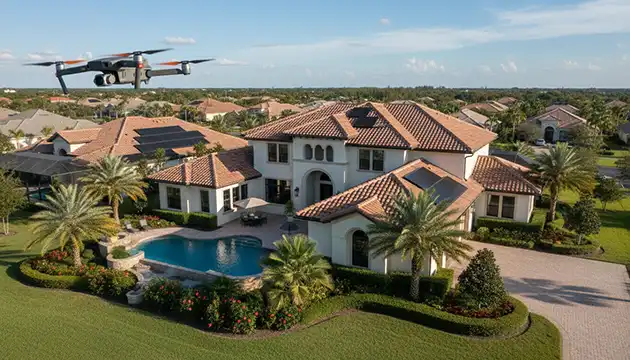
Conclusion: Why Coastal SWFL Is the “Sweet Spot” for Drone Inspections
Coastal Southwest Florida combines salt air, frequent wind, specialized roof materials, and intense sun in a way that makes roofs and exteriors age faster—and more subtly—than most people expect. The earliest damage occurs where you can’t easily or safely see it, but a drone can.
Drone inspections provide safer, faster, and more detailed insight into how those forces affect your home or portfolio. For coastal property owners, building drone inspections into your routine is a smart way to protect a high‑value asset and avoid nasty surprises.